As America marks the 250th anniversary of its independence, The European’s U.S Political Analyst Mike Bedenbaugh argues that the nation’s future prosperity depends on reclaiming its inheritance – the confidence and openness that made it successful in the first place
On July 4, 2026, the United States will celebrate the 250th anniversary of the Declaration of Independence. There will be fireworks, flags, speeches, military music and every familiar symbol of national greatness. But if America’s 250th birthday becomes only a celebration, it will be a wasted opportunity.
A republic survives 250 years not by accident but through ambition, sacrifice, rule of law and the willingness of each generation to embrace the imagination that repairs what the last one left unfinished. America deserves to celebrate what it became, but it must also confront what it is becoming.
As a Navy veteran, preservationist, past candidate for Congress and South Carolinian whose family has lived on American soil for 150 years before the Revolution, I write as someone who still believes in the republic, precisely because I know how easily inherited things can be lost. I understand how old buildings collapse when each generation assumes the next one will repair them.
Republics are no different. They fail when citizens confuse possession with stewardship, memory with responsibility, and ceremony with renewal.
In 1776, the U.S was not the great power Europeans would later know. It was a fragile string of colonies along the Atlantic coast, with roughly 2.5 million people. Today, it has nearly 342 million. That transformation is one of the most extraordinary stories in modern history.
America began as a republic on the edge of empire and became a continental power. It crossed mountains, built canals, spanned the continent with railroads, fed millions from its farms, powered factories, created universities, drew immigrants from across the world and became one of the great centres of invention, industry and science.
More importantly, America built a civic mythology around the future. It did not merely promise inheritance but possibility. The child of a farmer, factory worker, refugee, immigrant or freed slave could imagine a life beyond the station into which he or she had been born. The promise was never equally available to all, and that hypocrisy has always haunted the republic. But the promise itself had power.
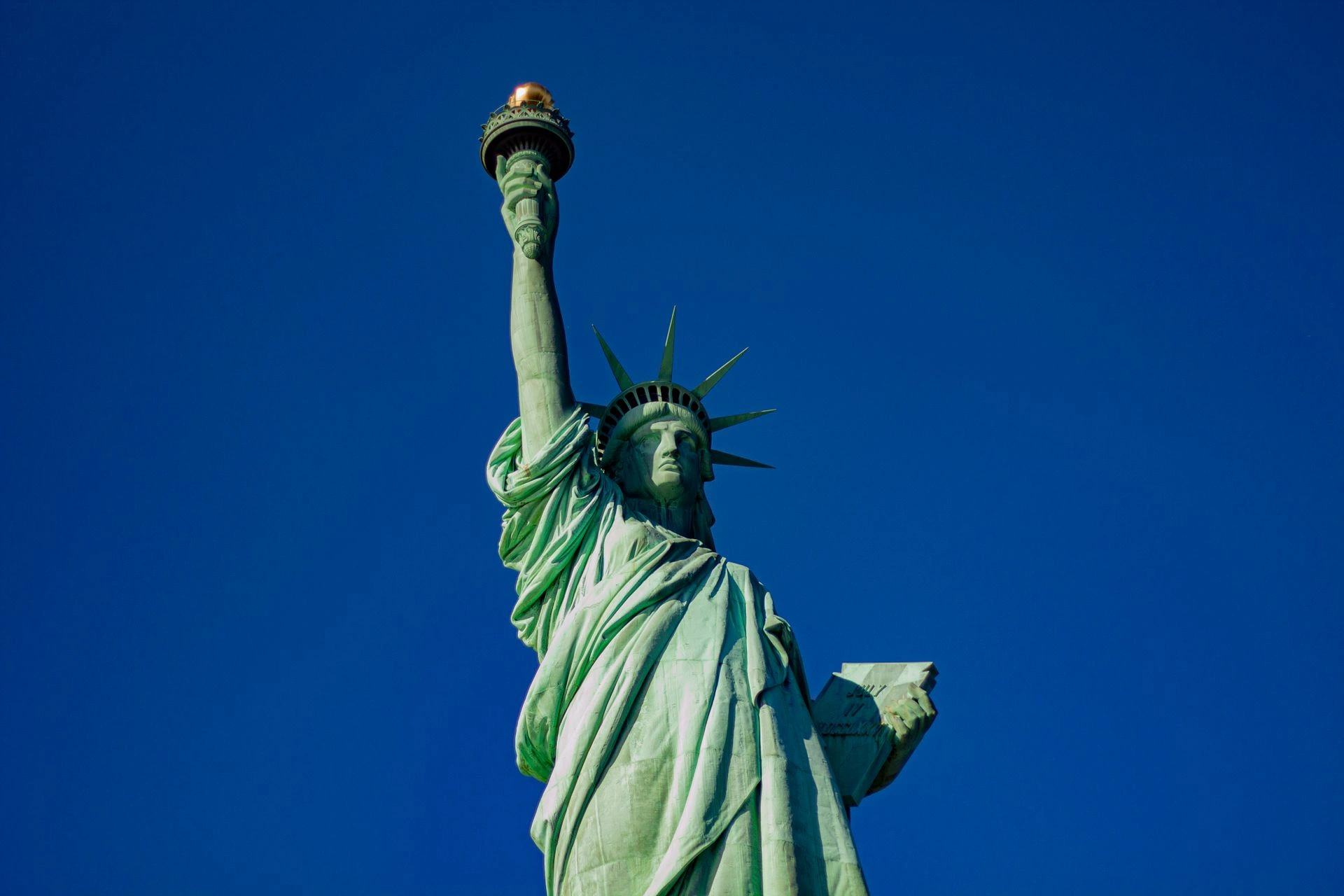
American author Emma Lazarus’s words on the Statue of Liberty became a moral statement: a lamp lifted beside the golden door, welcoming the tired, the poor and the huddled masses yearning to breathe free.
That image once captured something essential about the American spirit. It was not merely charity but confidence. A young nation believed that new people, new ideas, new labour and new ambition were sources of renewal. America became powerful not because it hid from the world but because it absorbed so much of the world’s talent, hunger and hope.
Yet America’s rise was never innocent. The policy of Manifest Destiny enlarged the republic, but it also justified conquest, displacement and violence against Native peoples. The American economy was built in part on slavery and racial exclusion. Expansion created farms, towns, railroads and markets, but also dispossession. A serious patriotism must hold both truths: America built something remarkable, and America committed grave wrongs in the process.
The danger now is that America remembers only the myth and forgets the discipline that made renewal possible.
By the late 19th century, America’s Manifest Destiny had carried the nation across a continent. But continental success tempted the privileged and powerful toward imperial habits. In 1898, after defeating Spain, the United States emerged as a Pacific and Caribbean power. Spain relinquished Cuba and ceded Guam, Puerto Rico and the Philippines, while Hawaii was annexed during the same era. A republic founded on consent now governed millions of people who had never consented to rule from Washington.
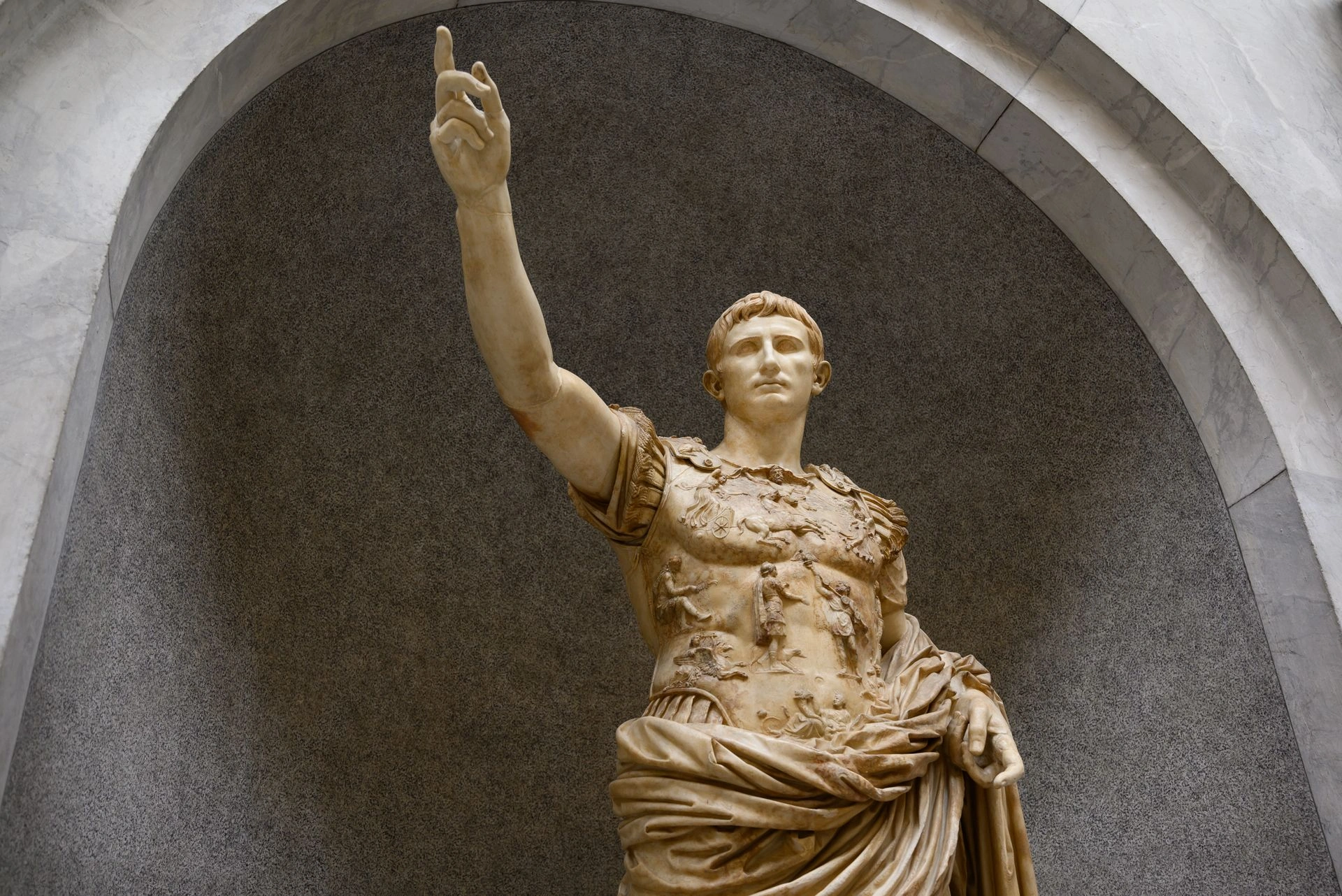
The Roman Republic had travelled a similar road. After defeating Carthage, Rome gained control of Spain and opened the door to Mediterranean dominance. But victory also changed the character of the republic itself. Conquest brought wealth, militarisation, inequality, factional politics and loyalty to ambitious commanders rather than republican institutions.
America’s defeat of Spain, like Rome’s defeat of Carthage, was celebrated as a triumph. But both victories carried a deeper cost. Expansion fed the appetite for empire, and empire began to weaken the traditions that had made republican liberty possible in the first place.
America’s danger is that it increasingly acts like a republic that no longer trusts republican habits. It wants imperial reach without constitutional discipline, global dominance without civic maturity, and technological superiority while resisting the openness, investment, education, infrastructure and public purpose that made those things possible.
This is the tragedy of America at 250. We inherited a country built by people who looked up and imagined what could be done. We are becoming a country that looks backward and asks whom to blame.
Many of my neighbours speak of our nation becoming ‘great again’ but too often define greatness as a return to a half-remembered past. We elevate leaders who protect ego rather than institutions, grievance rather than competence, mythology rather than truth. We boast about freedom while building politics around fear. We talk about strength, power and domination while acting as if immigrants, new technologies, new industries or new competitors will destroy us.
This is not the confidence that built America. A confident nation does not fear the next inventor, immigrant, student, scientific breakthrough or generation impatient with inherited failures.
A confident America would ask how to educate, employ, incorporate and challenge them. A frightened America builds walls both at its borders and around its imagination.
Meanwhile, the world does not wait. China is no longer merely a source of cheap goods. In 2023, China’s manufacturing value-added reached US$4.66 trillion, about 28 per cent of global manufacturing output – more than the U.S, Japan, and Germany combined. China has also been estimated to have surpassed the United States as the world’s largest performer of research and development, and Shenzhen-Hong Kong-Guangzhou has been ranked as the world’s leading innovation cluster.
These facts do not mean America is finished, but the U.S can no longer assume that past achievement guarantees future leadership.
That assumption may be our greatest weakness. For decades, Americans grew up inside a country so wealthy that many came to believe greatness was automatic. We inherited victory in the Second World War, the space age, Silicon Valley and the moral language of liberty. But a nation can spend down inherited capital just as a family can,
That is what America is doing when it substitutes culture war for industrial strategy, performative patriotism for civic duty, and nostalgia for invention. We do not lack resources but we do lack seriousness.
The question for America at 250 is, then, whether it still understands what made its greatness possible. It was not purity nor one ethnicity, one religion, one party or one leader. Neither was it isolation from the world or fear of change. America’s greatness came from constitutional restraint, invention, productive immigration, private enterprise and the repeated expansion of the national promise.
That is the America worth celebrating. But it cannot be preserved by myth. It must be rebuilt through choices: schools that teach history honestly; a Congress willing to reclaim responsibility from the executive; political parties that serve citizens rather than trap them; campaign finance rules that do not allow concentrated wealth to drown out voters; and immigration policy that is orderly and lawful but worthy of a nation that once understood the golden door.
Europeans know what happens when nations become intoxicated by grievance, seduced by strongmen or trapped by memories of lost greatness. Beneath the pageantry, a republic can be hollowed out.
That is why July 4, 2026, matters beyond America. The United States is an argument – imperfect, often hypocritical but still powerful – that free people can govern themselves, correct themselves and build a future without surrendering to kings, emperors, or dictators.
The 250th anniversary should be a moment of gratitude and alarm. Gratitude for those who turned a small coastal republic into a vast, inventive, prosperous nation, and alarm because inherited greatness is being squandered, a nation built by confidence is being trained to fear, and the lamp beside the golden door is being dimmed by those who mistake cruelty for strength.
America at 250 is not the nation of 1776, which was small, fragile and tied to another empire. That America is gone, but can the U.S recover the courage that allowed that small republic to imagine a future larger than itself?
Can America be great again? Yes, but not by retreating into myth, closing the door or mistaking brute domination for leadership.
America can be great again only if it becomes worthy again of its best story: a republic confident enough to welcome the future, humble enough to reform itself, disciplined enough to restrain power and brave enough to lift the lamp once more.

American author, political thinker and U.S. Navy veteran Michael Bedenbaugh is a respected voice in constitutional principles and American governance. Based in South Carolina, he contributes to national discussions on American politics, historic preservation and civic reform. He is the author of Reviving Our Republic: 95 Theses for the Future of America and host of the podcast Reviving Our Republic. He previously ran as an independent candidate for Congress.
READ MORE: ‘America’s panic over China risks becoming a self-fulfilling disaster‘. As tensions between Washington and Beijing intensify, the greatest threat may not be China’s rise itself but America convincing itself that losing global supremacy is an existential catastrophe, writes Mike Bedenbaugh.
Do you have news to share or expertise to contribute? The European welcomes insights from business leaders and sector specialists. Get in touch with our editorial team to find out more.
Main Image: Svetlana B/Pexels