Britain’s tradition of open justice depends on reporters sitting in courtrooms and witnessing what happens. But as court reporting declines, a vital democratic safeguard is quietly disappearing, writes Michael Leidig
Britain has long prided itself on a simple principle: justice must be seen to be done.
In accordance with this long-enshrined principle, our courts sit in public, defendants are usually named, and evidence is heard openly. The system rests on the idea that the public can see how justice is carried out and judge for themselves whether it is fair.
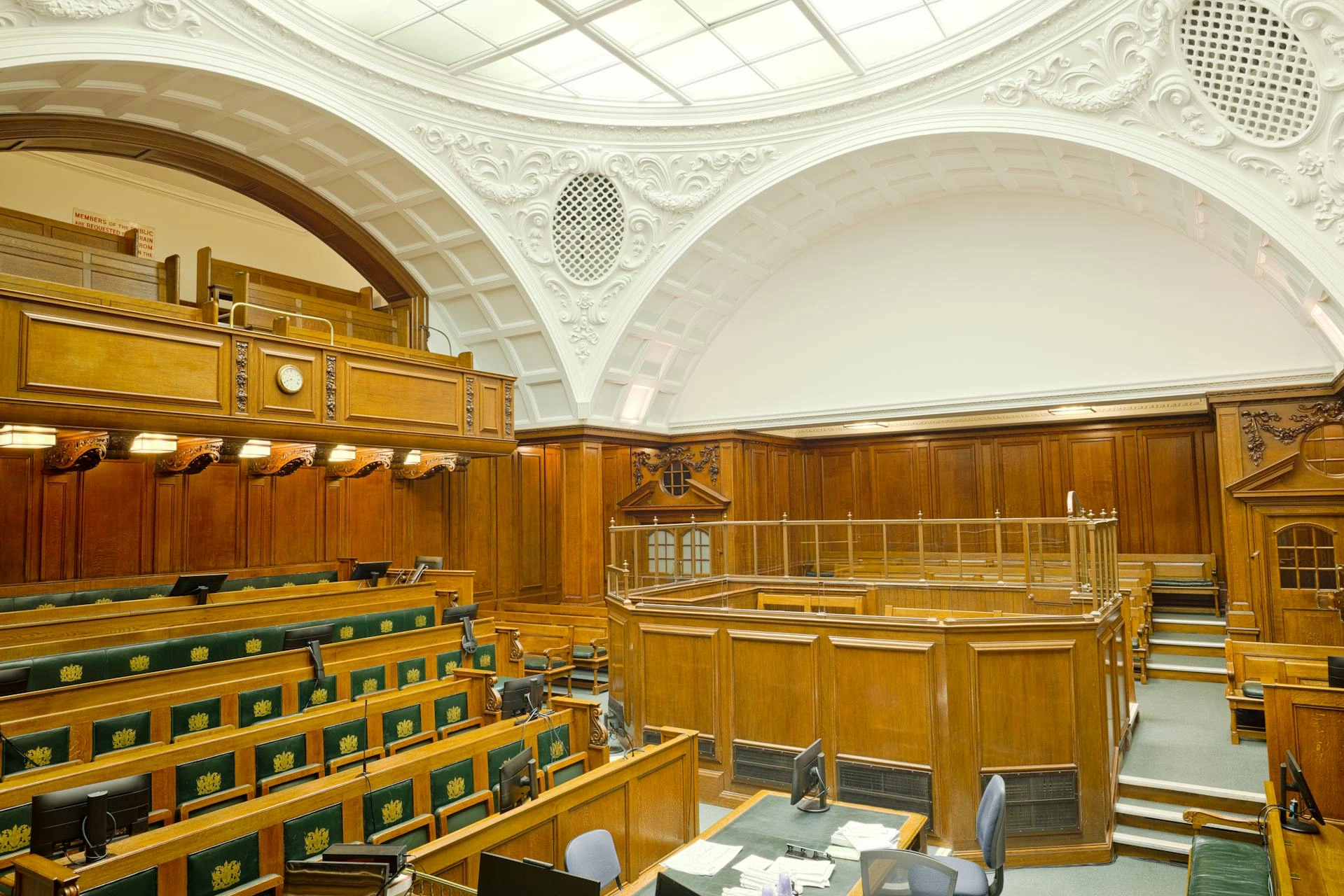
In practice, though, that visibility has always depended on reporters sitting on the press bench.
For generations, court reporters formed a quiet but essential part of the justice system. They watched proceedings, reported verdicts and sentences, and ensured that what happened inside courtrooms did not remain hidden from the public’s view.
That system, however, is now under strain. The number of journalists covering courts has fallen sharply in recent years, particularly at local level. Anyone who spends time in magistrates’ or crown courts today will often see long stretches of proceedings taking place with barely a reporter in sight.
This matters more than many realise.
Cases may begin with dramatic allegations and receive a brief burst of online attention, but the final outcome — conviction, acquittal or sentencing — may never be reported at all. People can be accused publicly yet cleared quietly. In consequence, the public record becomes incomplete.
To function, open justice depends on someone actually being there to observe it.
I learned that lesson early in my career. As a young reporter working at Cardiff Crown Court, I spent long days sitting on the wooden press bench waiting for something — anything — to happen. Court reporting was rarely glamorous. Much of the job involved cultivating relationships with ushers, clerks and court staff, and drinking tea in the court café while waiting for a hint that something important might be about to unfold.
One morning an usher mentioned that a judge in a rape case had asked for a social worker’s report before sentencing a 15-year-old boy who had been convicted by a jury. That suggested the possibility of a non-custodial sentence, so I stayed.
When the hearing resumed, the judge freed the teenager on condition that he paid for his victim to go on a “good holiday”. I was the only reporter in the courtroom when it happened.
The story ran on the front pages of national newspapers for days. It was raised in Parliament and eventually reached the Court of Appeal, which overturned the decision.
If nobody had been sitting on that press bench, the case might have passed almost unnoticed.
That is why court reporting matters — it’s a fundamental part of the machinery of open justice.
Britain has historically taken a more transparent approach to criminal justice than many other European countries. In much of continental Europe, strict privacy rules often mean defendants are identified only by initials. The public may hear about crimes but have little idea who committed them.
Britain chose a different path: public wrongdoing is answered by public justice. If someone commits a crime — theft, fraud, assault — there is a real chance that neighbours, colleagues, friends and family will read about it. That visibility provides accountability and can act as a deterrent.
But that transparency only works if someone is there to report what happens.
This is why the new Media Protocol on Open Justice, agreed late last year between police, prosecutors and media organisations, matters more than its bureaucratic title suggests.
In simple terms, it clarifies that material used in open court — including CCTV, photographs, video and other evidence shown to judges and juries — should normally be made available to journalists if they request it.
For reporters, that could make a real difference.
For years, even when powerful visual evidence was shown in court, journalists often had to rely on text descriptions alone. The public might hear that footage existed or that photographs had been presented, but not see the material itself. Access often depended on local discretion, delay or refusal.
The new protocol offers a clearer path.
That matters not only for editors and agencies but for the future of the beat itself. If court reporting can once again include images and video that help bring cases to life for readers, it becomes easier to commission and sustain.
In other words, it becomes easier for journalists to make a living doing one of the most important jobs in the profession.
Given how pressured Britain’s courts now are, with too many hearings taking place with barely a reporter present, that is no small thing.
A society that believes in open justice cannot be content with empty press benches. Justice may still be done inside the courtroom. But unless someone is there to witness it and report it, the public may never know.

Michael Leidig is a British journalist based in Austria. He was the editor of Austria Today, and the founder or cofounder of Central European News (CEN), Journalism Without Borders, the media regulator QC, and the freelance journalism initiative the Fourth Estate Alliance respectively. He is the vice chairman for the National Association of Press Agencies and the owner of NewsX. Mike also provided a series of investigations that won the Paul Foot Award in 2006.
READ MORE: ‘Why the $5B Trump–BBC fallout is the reckoning the British media has been dodging‘. After the BBC admitted misrepresenting Donald Trump’s speech — prompting an apology to the White House and two senior resignations — Michael Leidig argues that the fallout shows how far parts of the media have drifted from neutral fact-presentation, and why public trust is now at breaking point.
Do you have news to share or expertise to contribute? The European welcomes insights from business leaders and sector specialists. Get in touch with our editorial team to find out more.
Main image: Michael D Beckwith/Pexels