From children in Spain to athletes in Portugal and actors in Costa Rica, 2025 has already seen too many lives lost to water. Filmmaker Ed Accura, co-founder of the Black Swimming Association, argues that drowning must finally be treated as a global public health emergency
More people die by drowning each year than from fire, bicycle accidents or aviation disasters combined. It remains one of the ten leading causes of death among children and young people worldwide. Yet in 2025, despite decades of warnings, the figures are rising again.
Already this year we have seen lives lost in circumstances that were both tragic and preventable. Ameiya, 13, and her brother Ricardo Junior Parris, 11, drowned in Spain. The Brazilian goalkeeper Jeferson Merli, 27, lost his life in Portugal. The American actor Malcolm-Jamal Warner, 54, died in Costa Rica. King Edonm, 29, and Mo Liasu, 27, drowned in Portugal. These stories made headlines briefly, but the larger crisis remains in the shadows and largely unreported.
I have spent years working in drowning prevention through my documentaries Blacks Can’t Swim and Changing the Narrative, and as co-founder of the Black Swimming Association. My work has convinced me that this crisis will not change without fresh energy and new strategies. The pattern I see is the same across continents: the majority of deaths happen where no trained supervision is present. The simplest intervention is also the most neglected. Swim only where lifeguards are on duty.
That line was my answer when BBC presenter Merisha Stevenson once asked me for the one piece of advice I would give to anyone tempted by unsafe water. It later became the foundation of my latest project, a track called No Lifeguard. Music can reach communities untouched by official campaigns, and my aim was to take a stark safety message and give it cultural power. This track is intended as a public service announcement.
The chorus leaves no room for doubt: “If you don’t see a lifeguard then see no sea / If you want to take a chance then D by D (death by drowning).” The words are blunt because the consequences are unforgiving.
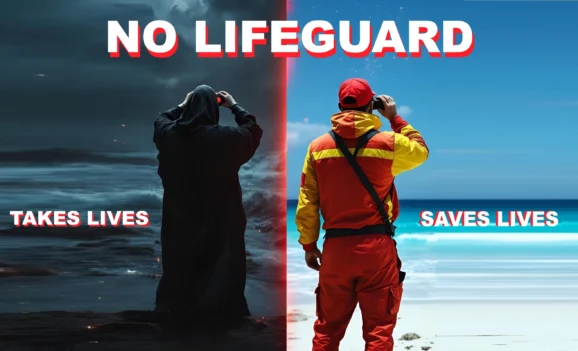
The artwork tells the same story. A dark figure looms against a serene beach where a lifeguard in bright uniform stands watch. The contrast is obvious: safety and danger are separated by a single choice.
The project brought together artists with very different voices. Maxoo contributes unflinching lyricism. Goldey One4 works with experimental hip-hop. Sayso is an Afro House artist and my long-time collaborator. And Samson Alexander is a London-based alternative hip-hop artist and film-maker. Together they lend the message greater reach and depth.
Their lyrics sharpen the theme. Maxoo raps: “This wave never fell off a boat / I ain’t swimming through life but I’m staying afloat.” Goldey One4 writes: “If you wanna take your life it’s not fine by me / but if you want to take a chance then just slide by me.” Samson Alexander recalls: “I was raised in the water, made by the water, changed by the water / three years old I’d jump into the water, with no arm bands or supporter.” Each perspective reinforces the same point: water inspires and transforms, but without safety it kills.
The deeper issue is structural. In too many communities, especially those historically marginalised, children never learn to swim and families never receive even the most basic safety information. That knowledge deficit is a direct contributor to preventable deaths. The Black Swimming Association was created to challenge this imbalance. In 2022 our work was recognised with the National Lottery UK Project of the Year award. That accolade showed what is possible, but the real measure is lives saved, and too many communities remain excluded from knowledge that could protect them.
Some insist the responsibility lies solely with the individual. I cannot accept that. I have met too many people who never had the chance to learn what safe swimming looks like. To blame the victim is to ignore systemic failures of policy, investment and will.
No Lifeguard is one way of carrying the message further, but it cannot be the only answer. Governments, schools, community organisations and sporting bodies must treat drowning as the public health emergency it is. That means more lifeguards, more swimming lessons, more targeted education in at-risk groups, and campaigns that reach beyond the already-converted.
When the track asks, “Do you want to take a chance?”, it is a challenge to society as a whole. Every time someone enters unguarded water, that chance is being taken. Will we continue to tolerate unnecessary loss of life, or will we act?
Ultimately, isn’t one life worth the effort?
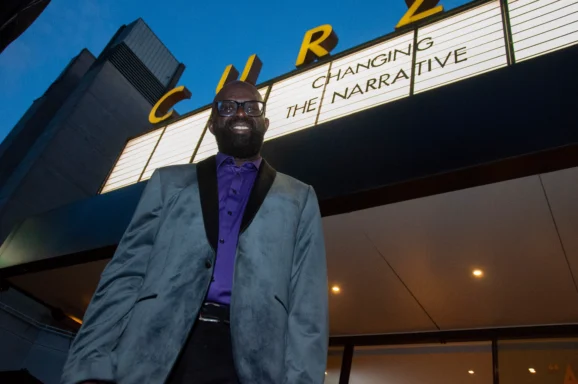
Ed Accura is the co-founder of the Black Swimming Association, a non-profit organisation promoting diversity and inclusion in aquatics through research, education and advocacy. He is also a music producer and filmmaker, best known for the Blacks Can’t Swim documentary series and Changing the Narrative (2024), both released on major streaming platforms. Under his leadership, the BSA was named the National Lottery UK Project of the Year in 2022 for its pioneering work in drowning prevention. His latest record, No Lifeguard, carries a public-safety message on the dangers of swimming without supervision.
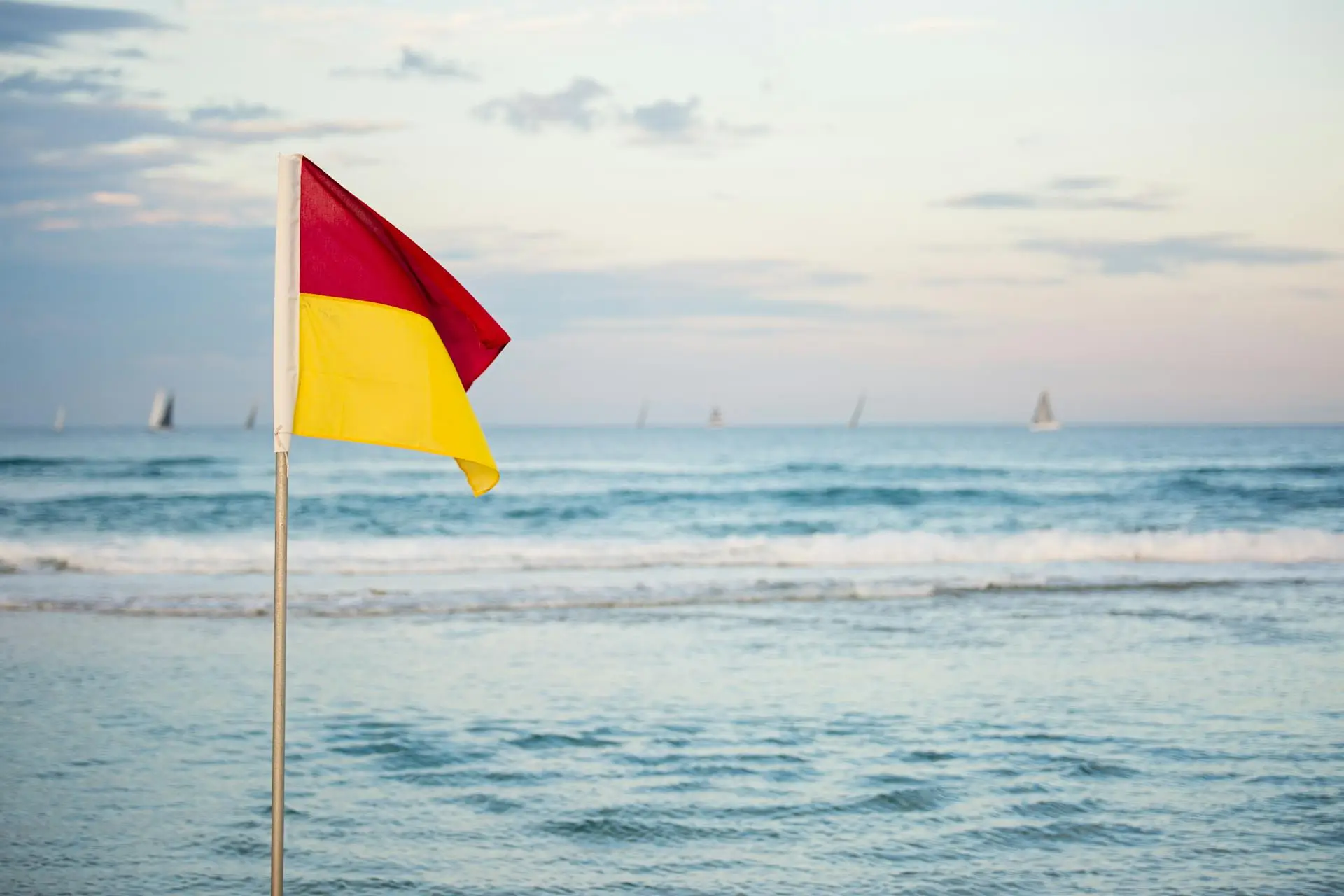
Main image: A red and yellow flag marks the safest area to swim, a reminder that water is only safe when lifeguards are on duty. Photo, Pexels.