As new peace talks begin between Russia and Ukraine in Istanbul, former BBC producer Oggy Boytchev explores why this city has long been the perfect stage for international intrigue – from Cold War secrets to modern-day diplomacy
The year is 1963. A British European Airways plane descends into Yeşilköy Airport, its silver wings glinting under the Turkish sun. Below, Istanbul unfurls: minarets, domes, rooftops clustered by the Bosphorus. A city straddling two continents.
Inside the terminal, a man walks with the confidence of someone who sees every corner. He’s immaculately dressed in a tailored grey suit, briefcase in hand, eyes alert behind his charm. This isn’t a holiday.
Waiting for him is a Turkish chauffeur. Their exchange is short, clipped and polite, but charged with suspicion. Here, everyone is watching.
As the man in the grey suit steps into the car, the camera cuts to a lurking figure in a trench coat trailing him silently. The city, it seems, already knows he’s arrived.
These are the opening scenes of the unforgettable James Bond film From Russia with Love, set in Istanbul.
When I first saw the film in the 1970s, behind the Iron Curtain in communist Bulgaria — on a smuggled VHS copy, I trembled with excitement. My friends and I delighted at the portrayal of the Bulgarian Secret Service, the all-powerful Durzhavna Sigurnost (DS), depicted as shabbily dressed half-wit killers. We took enormous risk simply by having the tape in our possession, let alone watching the film.
This is when my love affair with Istanbul began. The city I wanted to see was only 350 miles from my home and yet I was not allowed to visit. I had read historical novels about Byzantium and was enthralled by the vivid descriptions of Constantinople, as Istanbul was then known. The history of the Ottoman Empire was part of our curriculum. I stared for hours at maps of this great city and learned the names of streets and places.
My first field assignment as a journalist was in Istanbul in 1989. As a reporter for the Bulgarian Section of the BBC World Service, I was dispatched to cover the expulsion of hundreds of thousands of Bulgarian Turks by the communist regime in Bulgaria under a policy of forced assimilation.
The regime’s policy was blunt: you change your Turkish name to a Bulgarian one, you stop speaking Turkish and you become a Bulgarian — or you leave!
In the summer of 1989, 360,000 people abandoned their homes with only the possessions they could carry and moved to Turkey. This was the largest ethnic cleansing operation during the Cold War. Ironically, the regime called it ‘The Revival Process’. By the end of the year, the communist leader Zhivkov was removed in a bloodless coup and communism in Bulgaria gradually collapsed.
But Istanbul’s role as a gateway city, a place where international interests collide, stretches back much further. Over the centuries, the bustling cosmopolitan city has been the global centre of espionage and diplomatic machinations. Even back in the 19th century, during geopolitical rivalry between the British and the Russian empires in Central Asia known as the ‘Great Game’, Istanbul played a major role for secret talks and information gathering. It was known as the place where translators for every language in the world could be found.
During the Cold War, Istanbul was a listening post for NATO and US spy operations against the Soviet Union and its satellite states. The KGB, for its part, used Istanbul for counter-espionage and as a rendezvous point for couriers, defectors and recruitment of agents.
As the Soviet Union collapsed, new threats emerged. In the 1990s and 2000s, Istanbul became a hub for Islamist networks and Jihadist trafficking. Foreign fighters, weapons and money were moved through the city between the Balkans, Central Asia and the Middle East.
Its role as a political crossroads of the world continues to the present day.
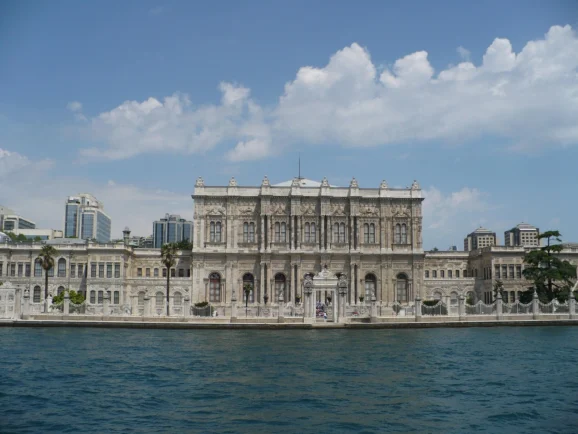
In March 2022, weeks after the Russian invasion of Ukraine, Istanbul became the venue of peace talks between Russia and Ukraine. These critical negotiations took place at Dolmabahçe Palace. The talks, which aimed to find a peaceful resolution to the hostilities, highlighted Turkey’s role as a mediator in international conflicts. They resulted in the so-called ‘Istanbul Communique’, which was never implemented.
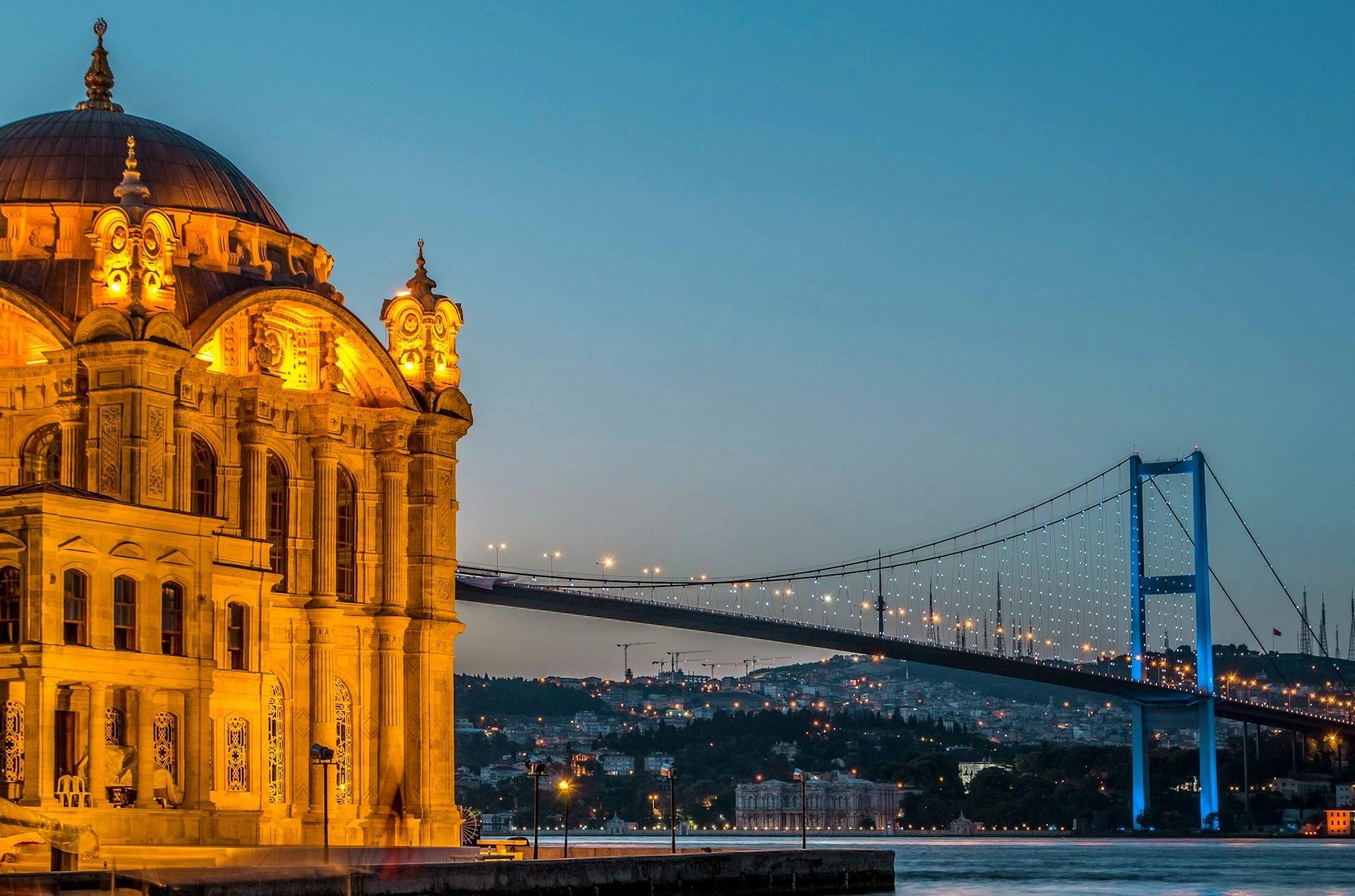
Dolmabahçe Palace on the banks of the Bosphorus is now hosting another round of talks between Ukrainian and Russian delegations.
When foreign delegations drive up the palm-lined approach to the palace’s imperial façade, they are stepping into a place carefully designed to impress. Dolmabahçe was the Ottoman Empire’s answer to Versailles, a calculated blend of Baroque, Neoclassical and Ottoman elements, crafted to dazzle the European powers of the past and convey the image of a modernised state.
Completed in 1856 under Sultan Abdülmecid I, the palace was intended to signal a break from tradition: a move from the cloistered courtyards of the old Topkapı Palace to a grand Western-style building. And yet, despite its chandeliers and French parquet floors, the palace remains undeniably Turkish, being a synthesis of East and West, just like the city that surrounds it.
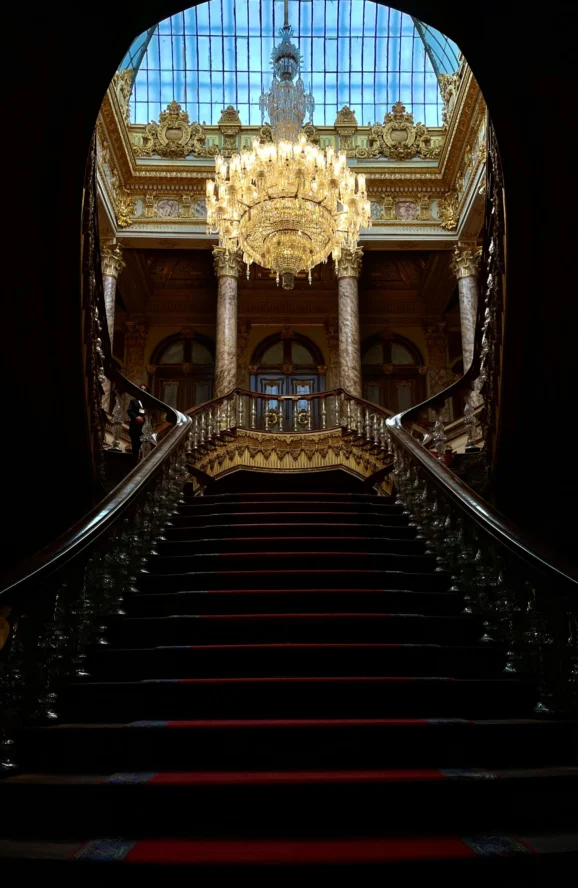
The palace has 285 rooms, 46 halls, six hammams (Turkish baths), and 68 toilets. One of the most iconic sights is the Crystal Staircase. Its banisters are made of Baccarat crystal, twisting like a chandelier turned inside out.
And the Ceremonial Hall, with its 4.5-tonne Bohemian crystal chandelier, the largest in the world, remains the palace’s most iconic space.
What makes Dolmabahçe truly unique is that it’s a functioning museum as well as a venue for high-level talks. Mustafa Kemal Atatürk, the founder of the modern Turkish Republic, died here in 1938. Room 71, where he died, is preserved as a national shrine. Every clock in the palace is frozen at 9:05 am, the moment of his death.
In recent decades, Dolmabahçe has hosted a number of discreet but significant diplomatic meetings. Turkish presidents and foreign dignitaries have used its salons for backchannel talks, symbolic signings or soft diplomacy gestures, especially when Ankara (the Turkish government) wanted to evoke imperial legacy or impress with cultural gravitas.
To hold talks in this building, then, is to negotiate beneath the gaze of Ottoman sultans of a vanished empire and republican reformers of modern-day Turkey.
I have loved Istanbul ever since I set foot on the banks of the Golden Horn, where the Bosphorus meets the Sea of Marmara, in 1989. Sadly, under President Erdoğan the political climate has changed. He’s been the dominant political figure for more than 20 years, during which there’s been a shift in cultural policy towards a more conservative, Islamic-oriented identity. Many see this as an erosion of the secular values on which the Turkish republic was founded.
During my assignments as a BBC World Affairs producer I visited Istanbul regularly, sometimes in transit, other times to cover major diplomatic or geopolitical stories. I even lived in the city for a time to study Turkish and came to know its streets and rhythms intimately.
That period inspired my forthcoming novel The Istanbul Connection, set in 2006 at the height of the Iraq civil war, when Istanbul once again found itself buzzing with diplomats, spies and shadowy dealmakers.
The book is a fictionalised tale of espionage and betrayal but rooted in real events I witnessed first-hand, capturing something of the same charged atmosphere that made From Russia with Love so unforgettable.
Bond creator Ian Fleming could never have set such political intrigue anywhere else. Nor, for that matter, can I.
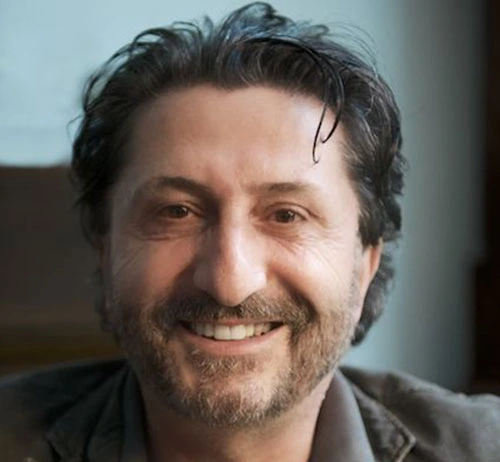
Oggy Boytchev is a celebrated BBC journalist and producer who has covered the majority of international conflicts over the last 30 years, often with the BBC’s World Affairs Editor, John Simpson. His critically-acclaimed book Simpson & I lifts the lid on the untold stories behind the headlines and documents some of the most memorable reports to appear on BBC News. Today, Oggy is an in-demand public speaker and author. His latest novel, Bullion – The Mystery of Gaddafi’s Gold, is an adventure spy thriller based on research into Gaddafi’s missing wealth
Image credits: Courtesy, krigell/Pixabay and saritas h/Burak Karaduman/Pexels