As global attention shifts to the urgent need for coastal ecosystem protection, China has taken the lead in launching the World Coastal Forum — an initiative first announced by President Xi Jinping at the Ramsar Convention in 2022. Stanley Johnson traces the Forum’s development, from its inaugural conference in Yangcheng to proposals for embedding it within the IUCN, and examines what’s now at stake for the future of the world’s coastal regions
I have been to countless international meetings on the environment over the last six decades, but the 14th Conference of the Parties (COP) to the Ramsar Convention on wetlands, held in Geneva in November 2022, stands out.
On the first day of the meeting, 5 November, China’s President Xi Jinping gave – by video – a brilliant opening speech about the conservation of coastal wetlands and ecosystems.
I sat there in that gilded conference hall, headphones glued to my ears, as he talked about the environmental challenges his country faced as far as the conservation of wetlands and species was concerned. This man, I said to myself, really seems to care.
Towards the end of his remarks, President Xi told us: “China has increased the area of wetlands to 56,350,000 ha. China is implementing a national conservation plan and major conservation projects.
“And China,” he added, “will promote international exchanges and cooperation to protect the four bird migration routes passing China and will build an international mangrove centre in Zhen Zen.
“China,” President Xi Jinping continued, “supports the convening of a Conference of the World Coastal Forum.”
I took off my headphones and stood up to join in the applause. Half the world’s population lives within 50 km of the coast. Half the world’s wealth is created within 50 km of the coast. How come, with all the groups out there, no institution or programme was focusing solely and exclusively on the world’s coastal areas? Now, at last, President Xi seemed to be proposing something new, something important.
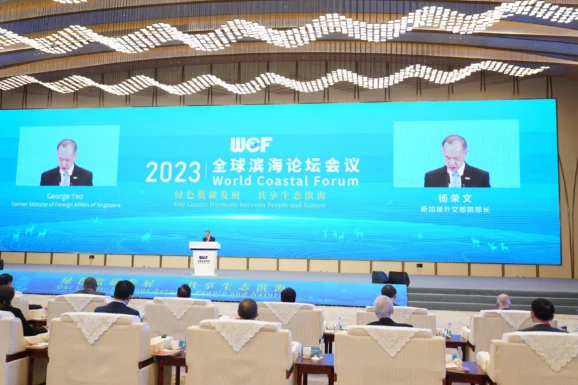
Those hopes were not misplaced. President Xi was as good as his word. Less than a year after the Ramsar COP at which he spoke, the first Conference of the World Coastal Forum (WCF) was held in Yangcheng, Jiangsu Province, China (25–27 September 2023).
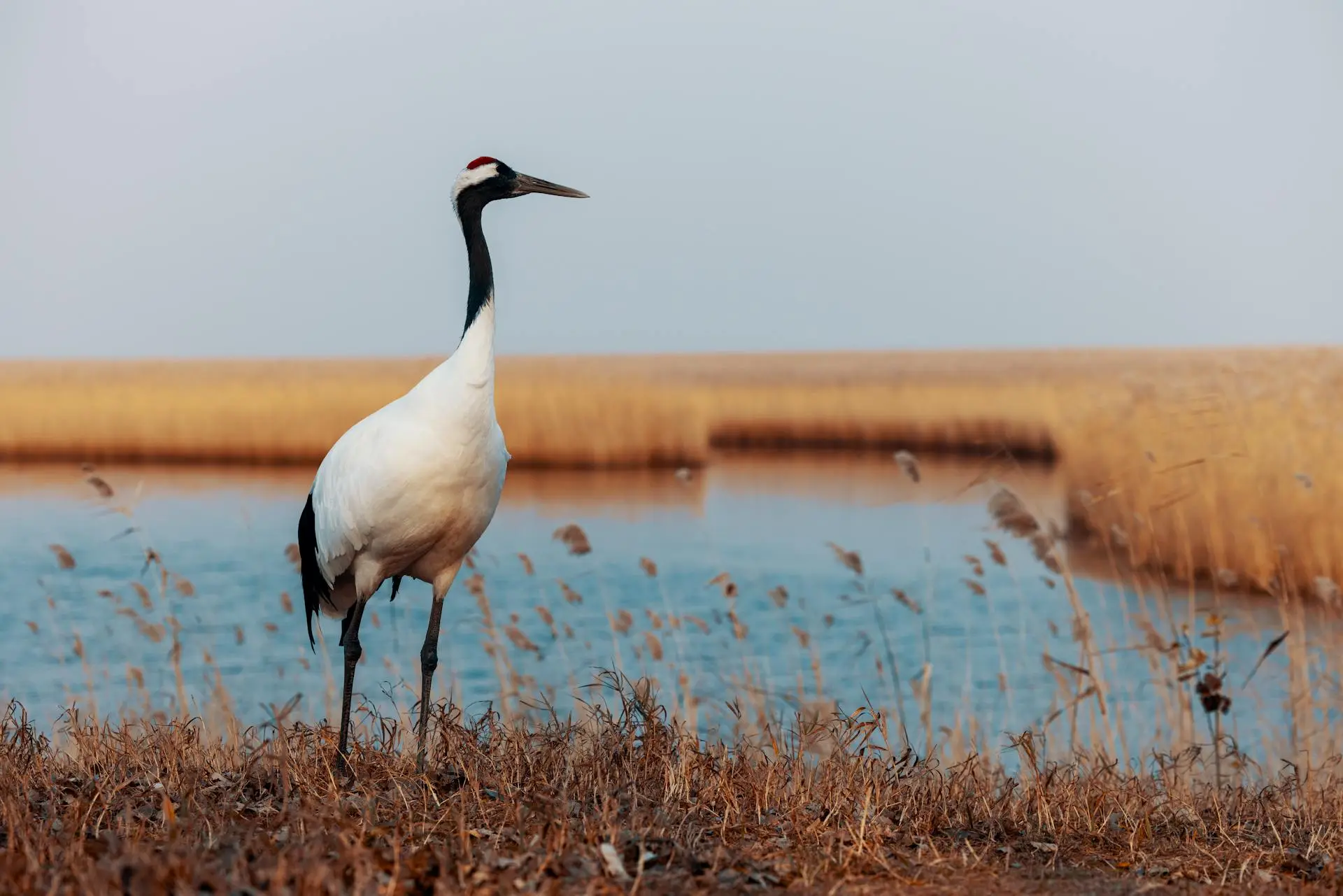
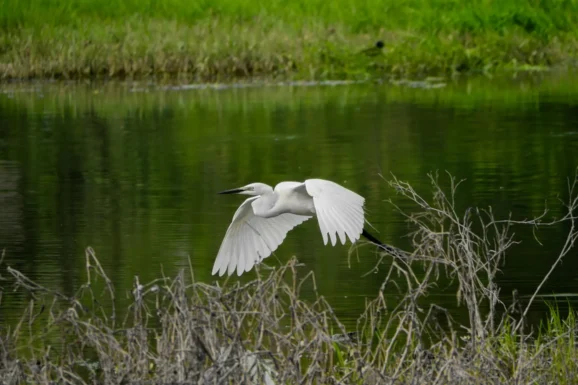
As a venue for the first Conference of the World Coastal Forum, it was an inspired choice. The Yangcheng wetlands and coastal zone contain some of the world’s rarest species, including the Père David’s deer and the red-crowned crane.
The ‘field days’ were very welcome, but hard work was done inside the conference rooms as well. The World Coastal Forum Partnership Initiative was launched with 21 organisations becoming partners. The conference also adopted the WCF Call to Action and heard progress reports on the development of a ‘State of the World Coastal Ecosystems’ report, as well as a global coastal ecosystem conservation ‘toolkit’.
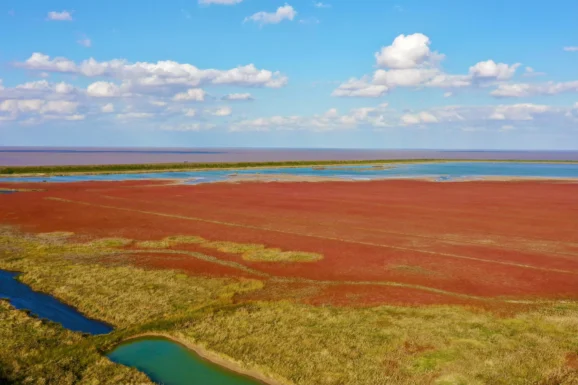
Later this year (25–26 September), the second Conference of the World Coastal Forum will again take place in Yangcheng.
A heavy agenda is expected, as the challenges relating to the management of coastal ecosystems have certainly not diminished over the last two years. On the contrary, the loss and degradation of coastal ecosystems have, according to WCF documents, increased dramatically in recent decades. Over 16% of tidal flats were lost between 1984 and 2016. Thirty-five per cent of global mangrove areas has been lost since the 1970s. Approximately 50% of global saltmarsh ecosystems were degraded or lost between 1999 and 2019.
Major cities located on the coast have expanded hugely in recent years, accelerating coastal ecosystem loss and degradation. Intertidal lands have also been claimed for agriculture, such as rice paddies, and, in the case of mangroves, for aquaculture – principally shrimp farming.
Apart from these substantive issues, the forthcoming Yangcheng conference will have to address a key practical question: in institutional terms, where does the World Coastal Forum fit in? The status quo does not seem satisfactory. President Xi set a high challenge with his speech that day in Geneva. China has not shirked that challenge. The country has borne the bulk of the WCF burden in terms of both finance and management. How long can that situation last? Surely, in terms of good governance alone, the present arrangements cannot be a long-term solution, regardless of any geopolitical considerations.
Happily, the international community, having warmly welcomed China’s initiative in helping to bring the WCF into existence, is now – I believe – fully seized of the need to find a permanent institutional home for the WCF, specifically within the IUCN.
The IUCN–World Conservation Union, based in Gland, Switzerland, is the oldest (founded in 1948) and possibly the most respected of all international environmental bodies. Every four years, IUCN members, both governmental and non-governmental, meet at the World Conservation Congress.
This year, the next meeting of the IUCN World Conservation Congress (WCC) will take place in Abu Dhabi, United Arab Emirates, from 9–15 October.
One of the key resolutions on the agenda is draft resolution 036-V001 entitled: “Facilitating synergistic delivery of multilateral commitments on conserving coastal ecosystems.”
It has been proposed by Eco Foundation Global (China), and co-sponsored by China’s Ministry of Natural Resources, together with ten other co-sponsors including the RSPB and BirdLife International (UK), Les Eco Maires (France), the International Crane Foundation (US), the Wildfowl and Wetlands Trust (UK) and the Nigerian Conservation Foundation.
In its first operative paragraph, the resolution, “RECOMMENDS that the IUCN Director General should strengthen IUCN’s role in developing the WCF to support synergistic delivery of multiple multilateral commitments to conserve and restore coastal ecosystems.”
It further states that IUCN’s support of coastal ecosystem programmes and activities should be: “…distinct from marine and freshwater, embedding it as an implementation and monitoring mechanism of the IUCN 2030 Strategic Vision and Programme, bridging, complementing and strengthening its Regenerative Blue Economy and Water Stewardship and Security global transformations.”
In other words, if I read the text correctly, by adopting 036-V001 as drafted, delegates to the Abu Dhabi World Conservation Congress will have decided that IUCN should not only assume institutional responsibility for the WCF, but also ensure the WCF’s key programmes, as outlined in the Call to Action, are fully integrated into IUCN’s work.
In my view, this, as Shakespeare put it, is a “consummation devoutly to be wished”.
Whether or not the World Coastal Forum, at its conference in Yangcheng this September, can formally ‘welcome’ an IUCN resolution providing for the long-term future of the WCF as part of IUCN’s work – even before the October Congress in Abu Dhabi – is something that the lawyers will have to work out.
But I am sure they will find a way.
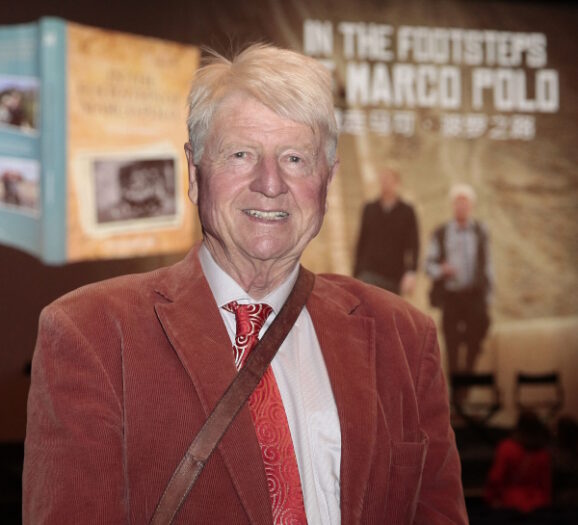
Stanley Johnson is a leading environmentalist, award-winning author and former Member of the European Parliament (MEP). Father of former UK Prime Minister Boris Johnson, Stanley has helped shape major environmental policies in Europe and championed global conservation efforts. He remains a powerful voice on sustainability, climate change and international affairs. He is also a distinguished and prolific author, with more than 20 books to his name spanning environmental protection and global conservation, fiction, and memoir. His latest novel, satirical political thriller Kompromat, has been critically acclaimed by the national press.
Photos courtesy Tom Fly & miyou_ 77/Pexels; World Coastal Forum