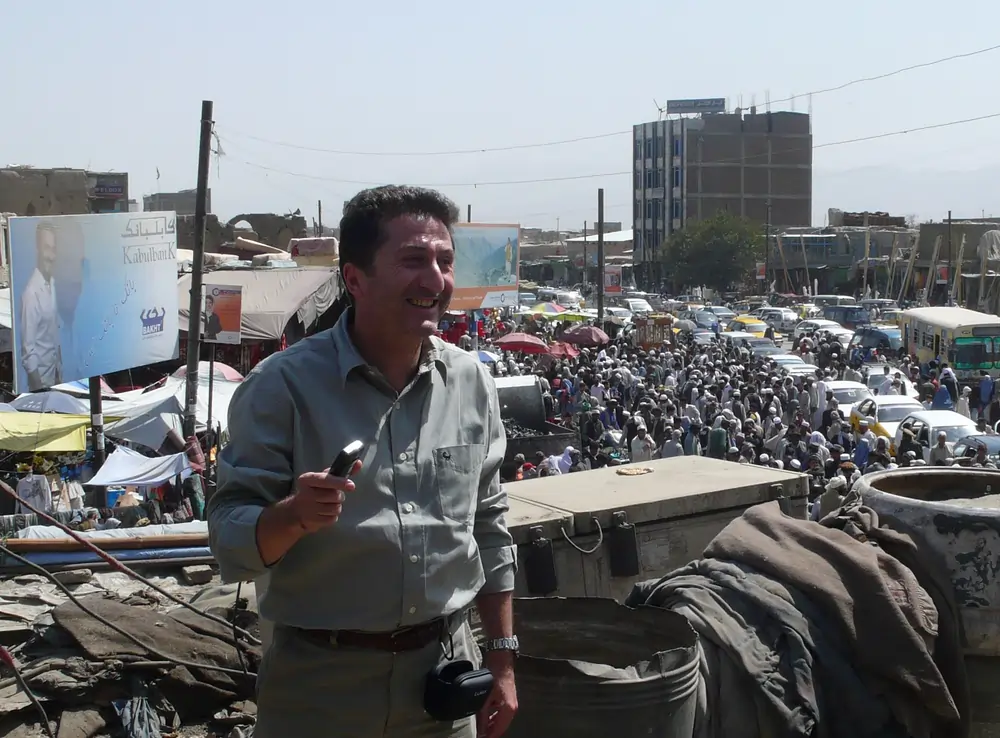
Journalists and spies often walk a fine line, especially in conflict zones where covert work, risk, and information-gathering blur the boundaries between professions. Here, former BBC World Affairs producer Oggy Boytchev reflects on a career shaped by war reporting, clandestine operations, and the questions that won’t go away – including the one he’s asked most often: what really separates a foreign correspondent from a spy?
When talking to audiences across the country about my books and my work as a former BBC World Affairs producer I have often been asked to describe what it’s like to work undercover in countries with hostile regimes, risking arrest and imprisonment. Surprisingly, in almost all these meetings an unrehearsed and unprompted question has come up time and time again: What is the difference between being a journalist obtaining information by covert means and being a spy?
Audiences don’t like complicated and long-winded explanations. So, over the last few years, I have honed my response down to a very short answer. Here it is: “The difference is what you do with the information you have gathered.”
Journalists put the information out in the public domain, spies convey it secretly to their employers.
There’s also a difference in the burden of proof.
For journalists the threshold is much higher – they have to have bullet-proof evidence for the veracity of their reports. Speculation and rumour are not tolerated by reputable news outlets.
Spies pass on their information to their agencies with much lower burden of proof. The strength of their information is evaluated by professional analysts who weigh it up against other sources.
Journalists ask questions and cultivate sources. This is exactly what spies do, too.
Over the centuries, there’s been a symbiotic relationship between journalism and espionage. Daniel Defoe, best known as the author of ‘Robinson Crusoe’, was a pioneer of business journalism. He used this as a cover for his work as a secret agent for William of Orange. However, his work as a spy wasn’t very profitable. A few years later he declared bankruptcy.
One of the most consequential spies in the 20th century was the German journalist, Richard Sorge (pronounced Zor’ge). He was The Frankfurter Zeitung correspondent in Tokyo during the Second World War, a perfect cover for his work as a Soviet spy. A fluent Chinese and Japanese speaker, a dapper dresser and a heavy drinker with a reputation of a bon vivant he befriended the Nazi ambassador to Japan and became his wife’s lover. It all sounds like a real-life James Bond.
In September 1941 he told his KGB handlers that Japan was not going to attack the Soviet Union from the east. Stalin procrastinated unsure if Sorge’s information was correct. Eventually, he was persuaded to trust Sorge’s message. He pulled fresh divisions from Siberia to defend Moscow. That changed the course of the war.
Unlike James Bond, Sorge was arrested, tortured, forced to confess and eventually hanged in a Tokyo prison in 1944. Stalin refused to intervene on his behalf. Twenty years later he was awarded the distinction of Hero of the Soviet Union, thus officially acknowledging his links to the KGB.
In other cases, journalists turned their experience in the field into blockbuster novels. One such example is Frederick Forsyth who turned his journalistic research into the attempted assassination of Charles de Gaulle into the unforgettable ‘The Day of the Jackal’ (1971). Another of his bestsellers, ‘The Dogs of War’ (1974), has a very contemporary ring to it – a mining executive hires a group of mercenaries to overthrow the government of an African country in order to gain cheap access to vast deposits of platinum. Forsyth drew on his experience as a BBC reporter during the Biafra conflict in 1967 – a war between Nigeria and the separatist state of Biafra.
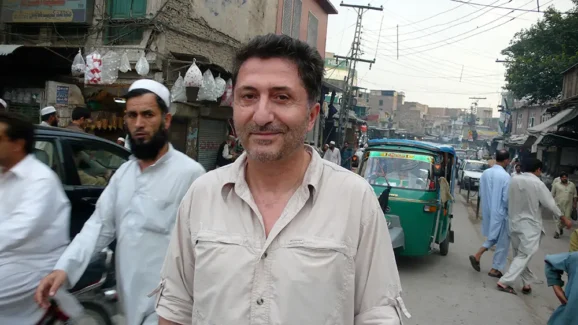
Most of my own work as a World Affairs Producer at the BBC consisted of finding and cultivating reliable sources of information in war zones and dangerous territories. Without such people none of what you see on the TV News would be possible. These sources often act as our fixers, translators and drivers – generally they are our eyes and ears on the ground. They fall in two categories. Some of them do it for money. Others, for ideological reasons. Very much like the pattern of recruiting spies.
When the BBC’s World Affairs Editor, John Simpson, and I worked undercover in Zimbabwe because of a ban on the BBC by Robert Mugabe we had to rely on trusted sources not just for information but also for safe accommodation, transport and suitable disguise when filming. Not to speak about entering and leaving the country without being detected by the police. On occasions, we employed local cameramen who would blend with the population when filming undercover.
Throughout the civil war in Iraq (2003-2011) we visited the country every four to five weeks. We used trusted local fixers to get around. Sometimes these fixers managed to take us to places which were off limits even for the Western troops. American military commanders confided to us on several occasions that they used our TV reports as open-source information for operational and tactical planning.
We pursued stories from Al Qaida atrocities to excessive violence by Western soldiers. One of the stories that fascinated me most at the time was what happened to Saddam Hussein’s money. When the regime fell in April 2003, the state coffers were empty. Where did the cash go? We investigated reports of how days before the Americans entered Baghdad Saddam Hussein’s trusted aides took the physical US dollar deposits from the Central Bank. Some people said the trunks full of cash were driven in a convoy to Syria. But no one was prepared to go on the record. Rumours also circulated that just before the invasion more than a billion USD belonging to the Iraqi state was withdrawn from foreign banks through convoluted bank transfers. The same money then allegedly came back to the country to fund the Sunni uprising against the American occupation and the new Shia regime. Sadly, the burden of proof was prohibitively high and the best part of these investigations did not see the light of day.
Years later, I have now turned some of this research into a novel, a fictionalised account of what might have happened and how it might have affected the people involved.
This is the subject of my upcoming new book, The Istanbul Connection, which is almost finished. Although inspired by real events, all characters and events described in the book are fictional.
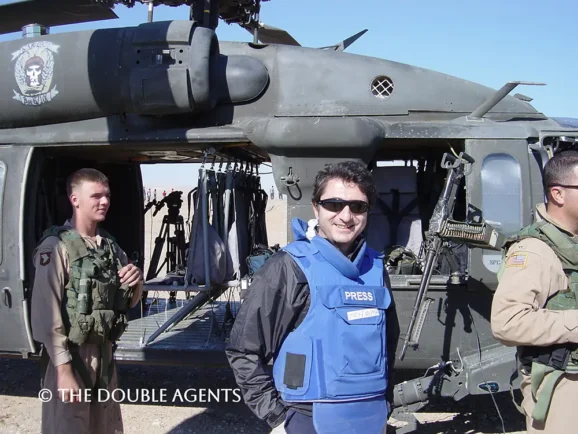
Oggy Boytchev is a celebrated BBC journalist and producer who has covered the majority of international conflicts over the last 30 years, often with the BBC’s World Affairs Editor, John Simpson. His critically acclaimed book ‘Simpson & I’ lifts the lid on the untold stories behind the headlines and documents some of the most memorable reports to appear on BBC News. Today, Oggy is an in-demand public speaker and author. His latest novel, Bullion – The Mystery of Gaddafi’s Gold, is an adventure spy thriller based on research into Gaddafi’s missing wealth.
Main image: Kabul Market