Louise Haigh MP’s decade-old fraud case, recently resurfaced in the media, has unveiled a troubling trend in modern journalism: the rise of politically biased reporting. By focusing on sensationalism and omitting crucial context, newspapers run the risk of eroding public trust, polarising society, and compromising the core principles of balanced journalism, warns Mike Leidig
A politician resigning over a decade-old guilty plea for mobile phone fraud might not seem like the story of the year. But when Louise Haigh MP stepped down under a barrage of sensational headlines, I decided to file a complaint with the press regulator IPSO about how one of the world’s most respected newspapers covered her story.
On the surface, my complaint might appear trivial: an inflammatory headline here, a few eyebrow-raising phrases there. But this isn’t just about one story—it’s about the broader issue of journalism succumbing to political bias, something I’ve seen firsthand and which I believe needs urgent attention.
The coverage of Haigh’s resignation was peppered with terms like “fraud conviction”, “police investigation into stolen phones”, and “convicted of fraud involving missing and stolen mobile phones”. While technically true, the framing painted a far graver picture than the reality.
A quick read of the headlines could easily leave you imagining Haigh as a serial phone thief who somehow slipped through the cracks to become a Cabinet minister. But that’s far from the truth.
In reality, her case involved a single phone. She pled guilty rather than dragging the matter through court, a decision the judge clearly considered, given the minimal penalty she received. Yet the reporting ignored these nuances, opting instead for sensationalism.
The tone of the coverage raises a troubling question: when journalists report stories allegedly fed to them by politically motivated sources, what responsibility do they have to counteract bias?
According to one paper, Sir Keir Starmer’s chief of staff may have allegedly orchestrated Haigh’s downfall, with whispers suggesting some Conservatives knew of her conviction before the election but held back, potentially to exploit it later for greater impact.
This kind of manipulation underscores a growing problem: when journalism is weaponised by those with political agendas, it stops being journalism and becomes activism.
At its core, journalism has one golden rule: present both sides of the story. Accountability is crucial, but it must be grounded in fact—not skewed by tone, omission, or innuendo. When this standard is ignored, the media alienates those who disagree with its narrative, creating echo chambers that deepen division and erode trust.
Biased reporting doesn’t just misinform but also fosters polarisation, shuts down dialogue, and turns political opponents into enemies. A balanced media is vital for democracy.
I know this all too well. Nearly a decade ago, a major digital news outlet falsely branded me as the king of fake news, claiming my news agency was a “fake news factory”. Their reporting was a hit piece, designed not to uncover truth but to undermine me as a supplier to their rival.
They knew their story would destroy my reputation and business. One of their investigators even admitted it before publication: “We are telling him we are about to destroy a business that took him over a decade to build.”
Their motive? Ideological warfare. Their method? Activism disguised as journalism.
The newspaper I’ve complained about is synonymous with accuracy but often leans toward a conservative viewpoint. Would its coverage have been so scathing if a Conservative minister were in Haigh’s position?
This is why I’ve also proposed a change to the Editors’ Code of Practice: to address political activism as distinct from journalism. The current code focuses on accuracy but doesn’t tackle the systemic slant that emerges when publications consistently target one political side.
This isn’t just a British problem. Consider Donald Trump’s recent $15 million settlement with ABC over a misleading election poll. Whether you like Trump or not, his case highlights the media’s potential for overreach. Misleading polls don’t just influence perceptions—they can shape election outcomes.
ABC’s settlement suggests something went wrong, yet coverage of the case focused more on discrediting Trump than scrutinising the ethics of the poll itself.
You might think, ‘It’s politics—everyone plays dirty’. But the stakes are higher than that. Trust in journalism is fragile, and biased reporting accelerates its erosion.
If newspapers continue prioritising agendas over accuracy, they will alienate readers, deepen polarisation, and undermine democracy itself. Journalism should challenge power, not wield it for political ends.
My complaint to IPSO isn’t about defending Louise Haigh; it’s about holding the media to higher standards. My proposal to the Editors’ Code Committee is about ensuring those standards evolve to protect readers from agenda-driven reporting.
It’s not the most glamorous fight, but it’s a necessary one. As C.P. Scott, the long-serving editor of The Guardian, once said: “The voice of opponents no less than that of friends has a right to be heard. It is well to be frank; it is even better to be fair.”

Michael Leidig is a British journalist based in Austria. He was the editor of Austria Today, and the founder or cofounder of Central European News (CEN), Journalism Without Borders, the media regulator QC, and the freelance journalism initiative the Fourth Estate Alliance respectively. He is the vice chairman for the National Association of Press Agencies and the owner of NewsX. Mike also provided a series of investigations that won the Paul Foot Award in 2006.
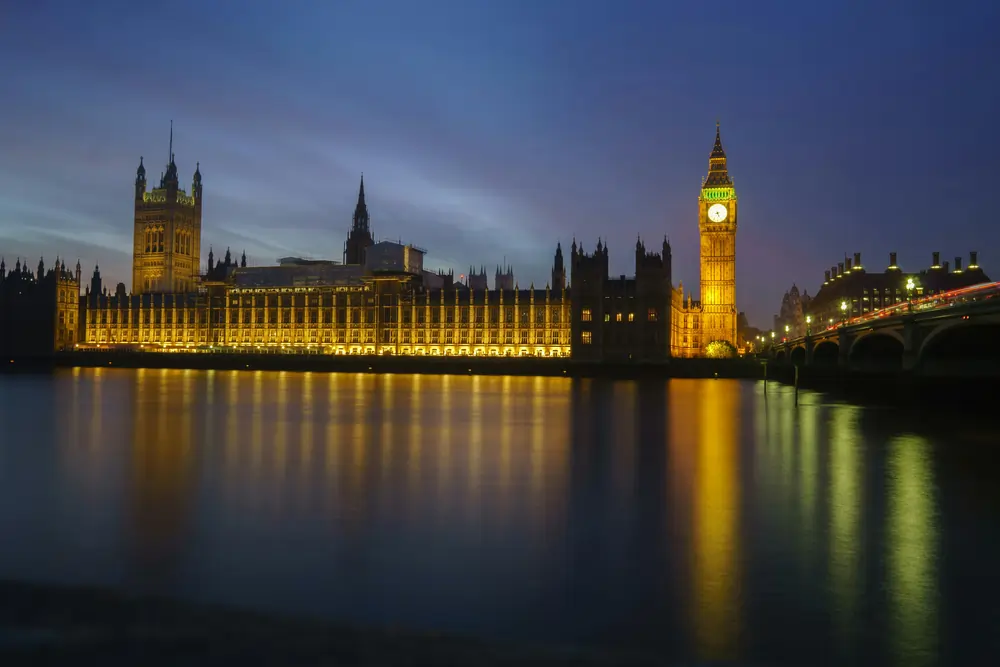
Main image: Courtesy Naveen Annam/Pexels