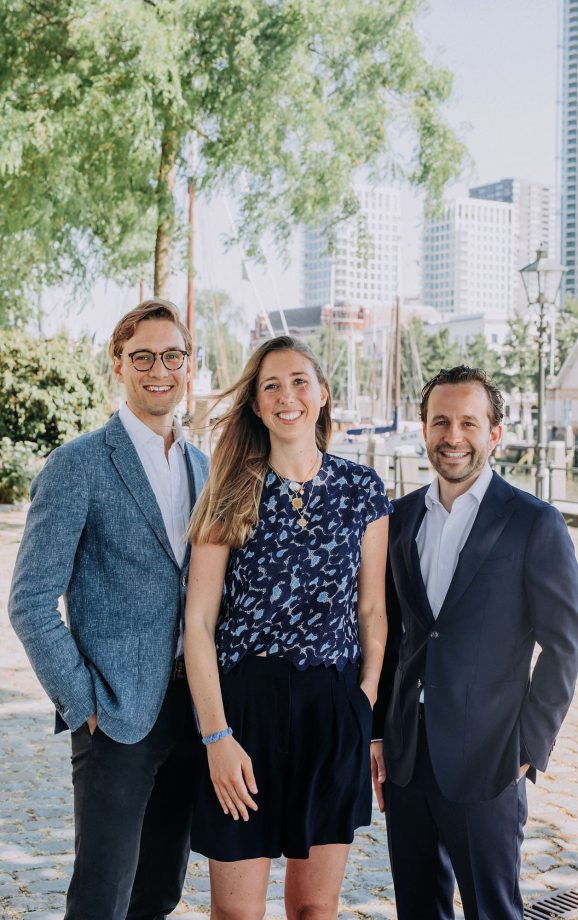
An interview with Felix Keser, Cilia Keser and Marc Roodhuyzen de Vries of sustainability management experts Nexio Projects
Nexio Projects represents the next generation of sustainability consultants. As a dynamic team of passionate change-makers, they aim to accelerate the transition from compliance- to purpose-driven organisations. How? By helping businesses identify where they stand on Environmental, Social and Governance (ESG) issues, setting new levels of ambition and creating practical roadmaps to walk the walk, all the while monitoring, tracking and reporting progress along the way. Nexio Project’s expertise ranges from supporting ESG rating and reporting, to carbon footprinting, lifecycle assessments and climate change and sustainability strategy work.
The European caught up with managing partners Felix Keser, Cilia Keser, and Marc Roodhuyzen de Vries to find out how businesses, in light of COP26, can leverage leadership, purpose, and collaboration to drive sustainable transformation.
Can you outline the key challenges companies face when developing sustainable programmes and initiatives?
Initial findings from our annual sustainability survey highlight three main challenges: limited understanding of ever-changing frameworks and standards, lack of leadership buy-in and difficulty in translating commitments into action.
“Corporate sustainability” has rapidly evolved over recent decades as we shifted from the era of corporate social responsibility (CSR) to a slow but sure standardisation of ESG measurement and reporting frameworks. The rapidity of this shift and mushrooming of standards, frameworks, certifiers, and raters has made it difficult for companies to focus on what is crucial to their company and operations, rather than what your competitor is doing. For example, a question we often get is: what weight should a company place on ESG issues and how should they prioritise? Going through a materiality assessment and using a rating such as EcoVadis can be a good start.
Another challenge is the lack of resources and support from both internal and external stakeholders. Many organisations still treat sustainability as a box-ticking exercise rather than a strategic framework. Leaders should not just devise sustainability goals but set a clear goal to be sustainable, and this takes a sense of urgency, personal commitment and clear pathways to action.
Finally, while many companies have the best intentions, we see the can often being kicked down the road. Beyond the lack of leadership commitment and accountability, clear incentive structures should be in place. We see it in our personal lives: to truly change behaviour, we need to be aware of our cognitive biases, mental models and limitations and build systems that enable change. The same applies to company transformation. Some examples are executive compensation linked to ESG performance or nudges that close the intention-action gap.
What are the main levers needed to drive sustainable transformation?
Again, we would highlight three main leverage points: leadership, purpose and collaboration.
Strong leadership – We see it again and again: the most successful organisations in driving sustainable transformation are those where leadership has taken clear ownership of the sustainability agenda and where the top-down meets the bottom-up. These are organisations where boards and C-suites are accountable for material ESG risks and opportunities. Tough questions such as “is our business model at odds with our sustainability ambition?” have been asked. Good leaders are conscious, empathetic and see opportunities where others see a challenge.
A sense of purpose – Purpose brings focus and creates the energy needed to drive sustainable transformation. Without this, organisations won’t be able to embed sustainability within their DNA and ensure long-lasting change.
Collaboration – This echoes the goal of COP26.Issues such as climate change are collective action problems, and no one can solve them alone. While this is true at the national level, the business community must shift to a mindset of collective ownership. There are fewer and fewer problems specific to any one company, industry, or even country. As a result, businesses should collaborate through joint commitments and movements and most importantly throughout their value chain: from customers to suppliers.
How does Nexio Projects support clients in this transformation?
Since 2017, we’ve partnered with more than 200 companies around the globe to help them grow on their sustainability maturity curve. This often starts with a benchmarking exercise – either on general ESG issues or a more specific carbon footprint assessment – and is followed by a gap analysis to identify practical roadmaps to action. Finally, to engage stakeholders in the process, we support our clients in communicating and reporting on efforts. Key to these projects is the importance we place on collaboration and partnerships, with clients, coopetitors and other domain experts alike. We are truly aware we cannot solve such issues alone and, in the same vein as COP26’s mission to “unite the world to tackle climate change”, we strongly believe in alignment, unity and inclusion. It’s a cliché, but it’s true: we’re so much stronger when we work together.
For further information: