Around 300,000 people die from drowning each year worldwide, many in circumstances shaped long before they got into difficulty. Here, Ben Hooper explains how he nearly died as a child and speaks to water safety campaigner Ed Accura about his new documentary, No Lifeguard
I was five years old when I drowned in a swimming pool in Belgium in 1984.
That sentence still looks strange on the page, even now. Perhaps because drowning is one of those words we use far too casually until it comes near us. It appears in headlines, safety notices and holiday warnings with a kind of administrative neatness, as though it were merely an unfortunate outcome.
In reality, drowning is much messier than that. You do not need a storm, epic waves, Hollywood panic or somebody flailing theatrically in full public view. Sometimes you just need a little overconfidence, a missed second, a body that tires sooner than pride expected or a moment when the adults assume somebody else is watching.
What interests me now, more than 40 years later, is not only that I survived but how little our wider social imagination around water has changed. We remain very good at selling water and oddly poor at respecting it. We package it as leisure and freedom. Only later, sometimes far too late, do we mention cold shock, currents, fatigue, depth, hidden hazards or the stubborn human tendency to confuse familiarity with safety.
That is why filmmaker Ed Accura’s forthcoming documentary, No Lifeguard, lands with force.
On the surface, ‘No Lifeguard’ sounds like a warning notice nailed to a fence. But in Accura’s hands, it becomes something broader and more uncomfortable. His idea is not to diminish trained lifeguards, still less to blame those who get into difficulty. Quite the opposite. What he is really arguing is that we have quietly built a culture in which water safety is too often imagined as somebody else’s responsibility until the moment it becomes catastrophically our own.
That, I think, is the strength of the film’s central proposition. It’s not really about the absence of a professional in a highchair with binoculars and a rescue board, but about the dangerous fantasy that safety begins at the point of rescue.
“Safety begins before the waterline,” Accura said. “It begins in judgement, in humility, in education. In deciding that you do not know enough. In choosing not to enter at all.”
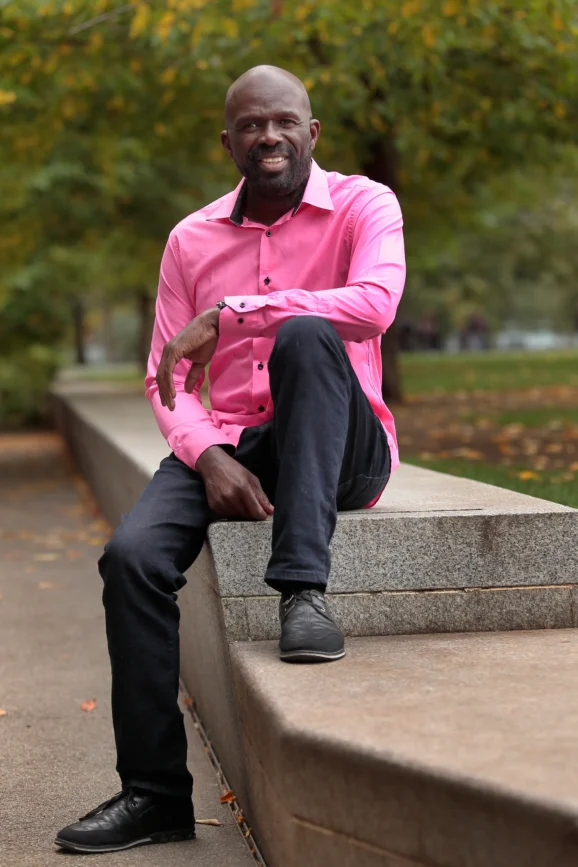
As someone who nearly died in water as a child, I know one version of that truth. As someone who later spent much of his adult life going back towards water, not away from it, I know another. In 2016, I made the world’s first verified attempt to swim from Africa to Brazil across the Atlantic Ocean. This year marks 10 years since that attempt. People sometimes hear those two facts — the five-year-old who drowned in Belgium and the adult who later chose the Atlantic — and assume they contradict one another. They don’t. They belong to the same story.
Accura describes himself as “a music and film producer who uses creative media to carry messages into cultures that might otherwise be missed”, particularly in the aquatic world.
What gives his voice particular interest is that he did not even learn to swim until adulthood.
Accura, who is also the co-founder of national charity the Black Swimming Association, told me: “I spent much of my adult life hiding behind the stereotype that Black people do not swim.
“Becoming a father altered the way I thought about water as I always had this fear in the back of my mind that if something happened to my daughter in the water, I wouldn’t be able to help her.”
The emotional turning point came during a holiday in Barbados in 2018, sitting on a catamaran while friends swam around him,
“I was the only person wearing a lifejacket,” he said. “That moment stayed with me.”
What followed was first a song, Lads Can’t Swim, and then the 2018 documentary Blacks Can’t Swim, which explored the cultural barriers, stereotypes and anxieties surrounding swimming within Black communities.
Two years later, he went on to found the BSA alongside Alice Dearing, the first Black woman to represent Great Britain in swimming at the Olympics, former BBC journalist Seren Jones, and entrepreneur Danielle Obe.

Accura, who is also The European’s Public Safety & Inclusion Correspondent, told me that after his fourth self-funded documentary, Changing the Narrative, came out last year, he had promised his wife he’d “slow down for a while.”
Then came the summer of 2025, and with it a steady run of drowning stories, many linked to leisure settings and holidays. Accura was invited to the BBC to discuss water safety and was asked, at the end of the program, for one piece of advice.
“If you are ever by water, especially leisure water, and you do not see a lifeguard, do not get in the water,” he said.
“Once home, I could not leave the thought alone.”
What would ultimately become his new documentary started out as a song, also titled No Lifeguard.
“It became a warning shot,” Accura said. “The young rappers we worked with quickly connected the title not just to swimming, but to life itself.”
The phrase that now sits at the centre of Accura’s thinking is “lifeguard ecosystem”, as he explained.
“The lifeguard matters enormously. But the first part of guarding a life happens long before a whistle blows.
“It happens in the choices made by the swimmer, the friend who says, ‘Go on, it’ll be fine’.
“I’m not asking people to take lifeguarding into their own hands. I’m talking about due diligence. Am I equipped to do this? Is it safe to get into this water? Am I honest about my limitations? What is the water doing today?”
Accura’s point is well made. We wouldn’t, for example, usually get into a car without at least some thought about our ability to drive, the conditions and the journey ahead.
Why, then, do so many of us treat entry into water as an impulsive act rather than a considered one?
Drowning is not a niche issue. The World Health Organization estimates that around 300,000 people die from drowning each year and that the overwhelming majority of those deaths occur in low- and middle-income countries. It remains one of the leading causes of death for children and young people worldwide.
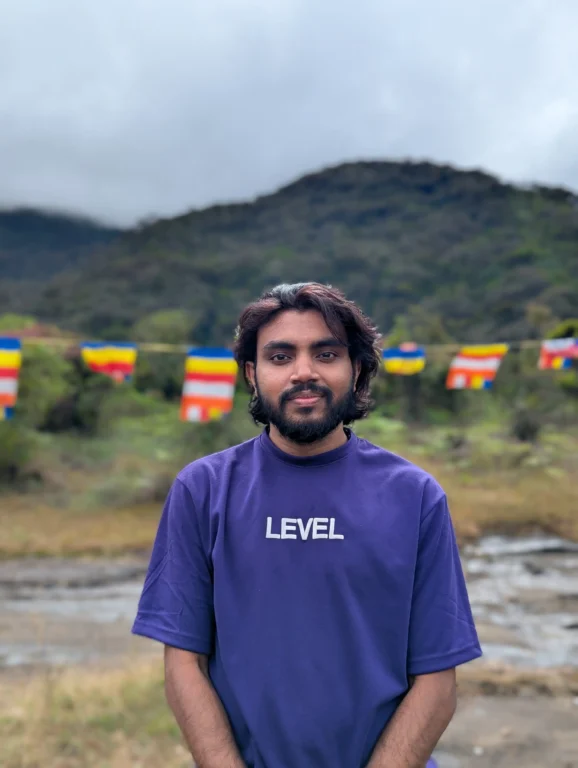
Drowning is not merely an accident problem. It tells us something about who has access to swim education, who grows up around safe water culture, who can reach guarded beaches, who has decent infrastructure and who is left with little more than hope and luck.
In Britain, we can flatter ourselves that water safety is a mature subject, yet participation, access and confidence are still unequally shared across communities. That is where Ghana and Sri Lanka become more than settings in Accura’s new documentary. They become moral evidence.
His reasoning is simple: if the greatest burden of drowning falls on low- and middle-income countries such as Ghana and Sri Lanka, that is where the need is greatest too. He has rooted this project where the message may be most urgent.
Ghana also carries personal weight for Accura, who is ancestrally Ghanaian.
There is another dimension that Accura wants to convey through No Lifeguard. Sometimes water is not the thing you travel to for leisure. Sometime, water comes to you. Floods, storms and sudden disasters change the conversation entirely.
His point is not only that people must think before entering the sea but that communities also need awareness, preparation and respect for water as a force that can arrive at the door uninvited.

Any serious conversation about drowning has to admit that poor infrastructure, patchy swimming education, underfunded services and weak public messaging are real. And they kill people.
Some seasoned open-water swimmers may resist the bluntness of the phrase “No Lifeguard”. They may argue that wild swimming, open-water training and adventure are not inherently irresponsible simply because no lifeguard is on duty. That is true, but it misses Accura’s main point. He does not address the experienced few but is speaking to the unprepared many: holidaymakers, weak swimmers, casual swimmers, overconfident visitors and anyone who mistakes a pleasant day for a safe one.
I was struck, too, by the way in which his project joins film and music. The soundtrack piece 1 LIFE is not merely a promotional extra but part of the same argument: “You only have one life, so guard it.”
The truths that save lives are often unglamorous. Hence Accura’s mantra for his Lifeguard Ecosystem:
- Know where you are.
- Know what you can do.
- Know what you cannot do.
- Know whether help is actually there.
- Know whether the conditions have changed.
- Know that confidence may not be the same thing as competence, and above all,
- Know that rescue is not a plan.
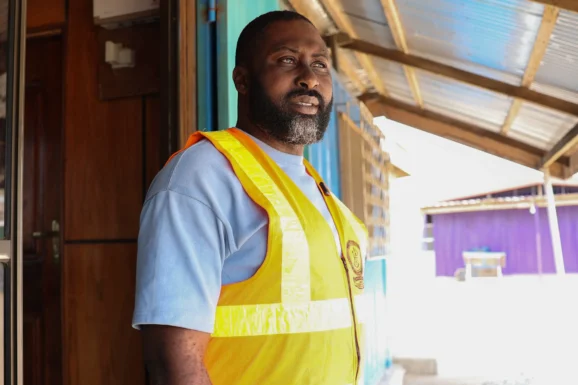
For me, there is a private irony in writing this now, on the 10th anniversary of my world-first, Atlantic Ocean swim attempt. In 2016, I went towards one of the largest and least negotiable bodies of water on earth. Yet if the ocean teaches anything worth keeping, it is not machismo but proportion. It teaches that the body is honest long before the ego is, that the line between courage and stupidity is not fixed and that sometimes the finest decision available to a swimmer is retreat.
And perhaps, that is where No Lifeguard finds its real urgency. Not in the spectacle of drowning but in the ordinariness of the decisions that precede it. The documentary Accura has made is not asking us to fear water — it is asking us to stop lying about it.
The most serious lifesaving work rarely looks dramatic. It looks like children being taught that swimming is a survival skill, not a luxury. It looks like a culture in which “Can I?” is not automatically mistaken for “Should I?”
That is why the title No Lifeguard stays with you. What will you do when the system is absent or is simply not there? More importantly, what will you do before that moment arrives?
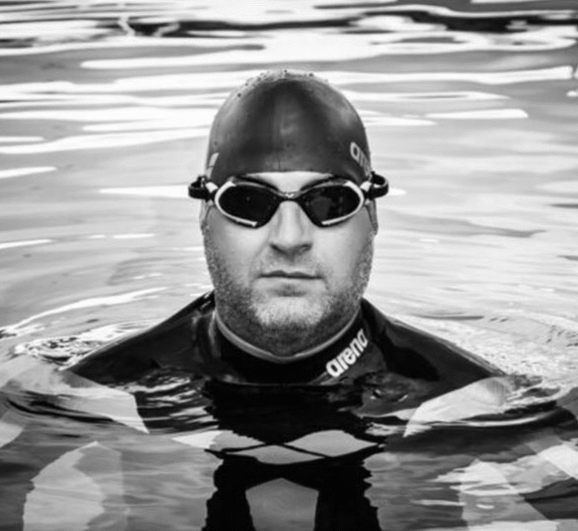
Ben Hooper made global headlines with his bid to swim every mile of the Atlantic Ocean — a challenge Sir Ranulph Fiennes OBE called “the last great bastion to be conquered.” His four-month, 2,000-mile route from Senegal to Brazil, known as Swim the Big Blue, was derailed mid-Atlantic after his support vessel was damaged by storms, despite him surviving a near-fatal encounter with thousands of Portuguese Man O’War. He remains the only person with a WOWSA-verified attempt at the feat. Follow him on Instagram and X @TheBenHooper or via www.thebenhooper.com
READ MORE: ‘Schoolchildren put to the test in pioneering open-water swimming club‘. Taunton Preparatory School has built one of the country’s most striking youth open-water swimming programmes, with pupils taking on Channel relays, Solent crossings and cold-water training under the guidance of coach Hamish McCarthy. Ben Hooper reports on how ordinary schoolchildren are being prepared for some of Britain’s toughest open-water challenges.
Do you have news to share or expertise to contribute? The European welcomes insights from business leaders and sector specialists. Get in touch with our editorial team to find out more.
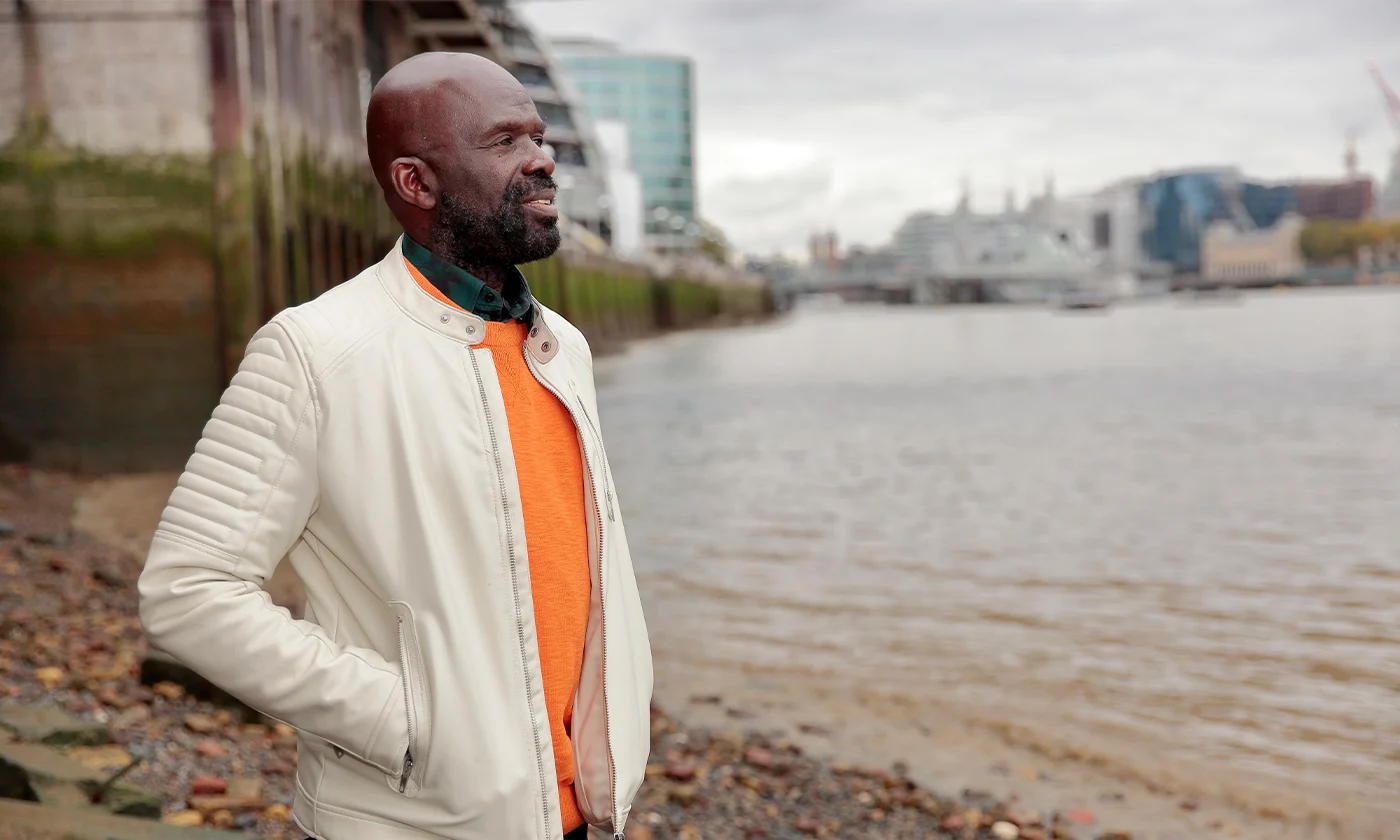
Main Image: Filmmaker Ed Accura’s forthcoming documentary No Lifeguard argues that the most important decisions affecting water safety are often made long before anyone enters the water. Credit: Supplied