New AI breakthrough promises to end ‘drift’ that costs the world trillions

John E. Kaye
- Published
- News, Technology
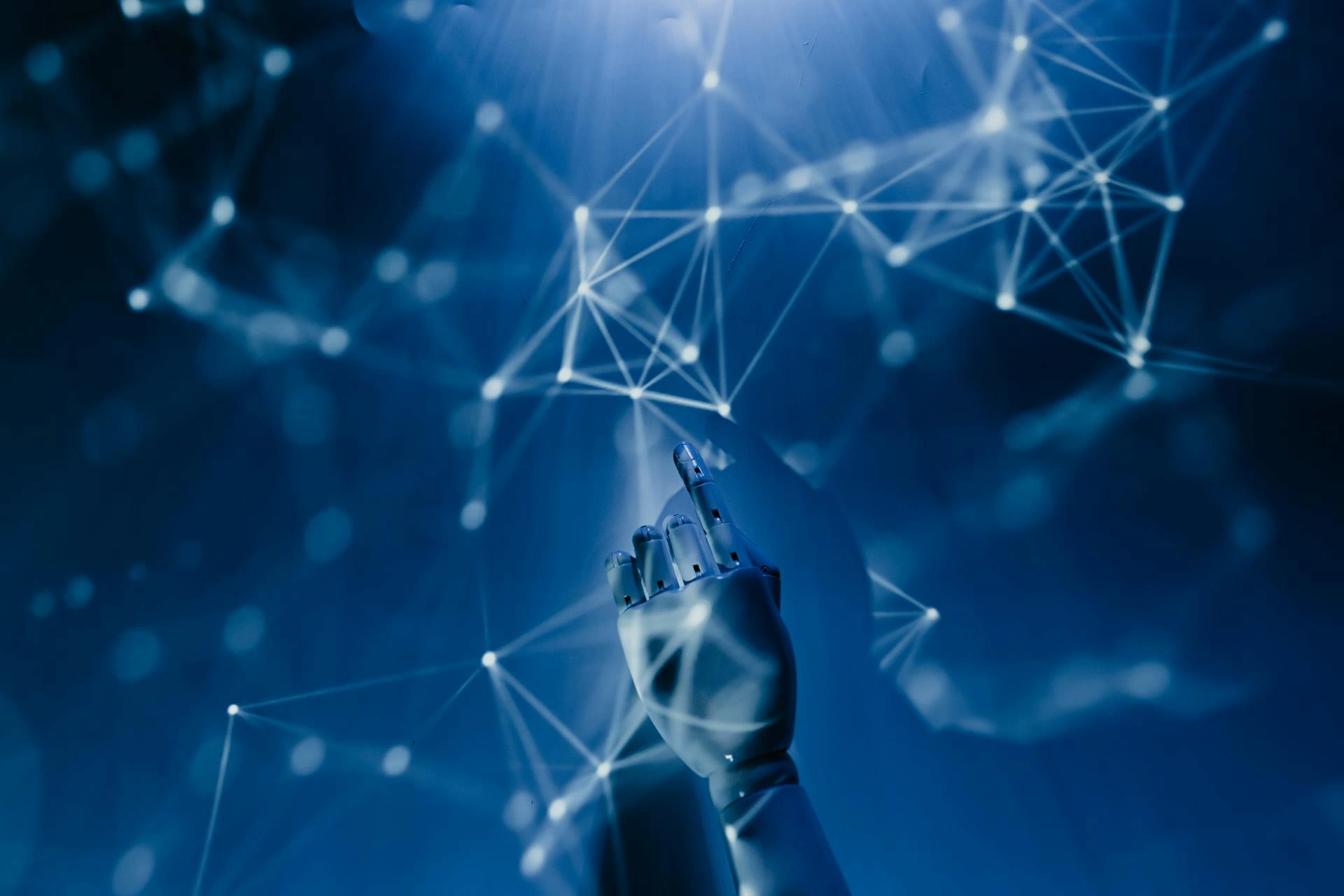
A new artificial intelligence framework claims to have solved one of the technology’s biggest flaws by producing identical answers every time — a breakthrough its creator says could restore trust and stability to the machines now driving global decision-making
A British researcher says he has solved one of artificial intelligence’s biggest flaws — the fact that it can’t give the same answer twice.
Martin Lucas, Chief Innovation Officer at Matrix OS and TheaHQ, has unveiled a system called Decision Physics which, he claims, can make AI completely consistent. Unlike current models such as ChatGPT or Google’s Gemini, which rely on probability and can contradict themselves from one question to the next, Decision Physics is said to produce the same result every time.
In live trials, 1,000 identical prompts generated 1,000 identical responses, with every result independently verified through audit-grade receipts to confirm perfect reproducibility.
The results, published in a report titled The 30 Per Cent Problem: The World Is Arguing with Its Own Machines, suggest that the instability built into modern AI could be costing the global economy as much as £17.2 trillion in lost value.
“AI has become our new infrastructure,” Lucas said yesterday. “But it’s built on probability, not physics. The same model can disagree with itself across two runs — which means trust, compliance, and even accountability collapse before scaling begins. We needed a new foundation. So we built one.”
The new framework replaces statistical guesswork with what Lucas calls ‘deterministic computation’ — meaning identical questions, under identical conditions, always give identical answers. His team has set out four “laws” governing the process: identical inputs yield identical outputs; equivalent statements resolve in the same way; every answer carries a record of its origin; and results stay stable even when the model or data are updated.
The test environment, known as the TheaHQ Deterministic Build Pack, uses fixed clocks and verification receipts to remove randomness entirely. Each of the 1,000 trials produced a result that was identical at the smallest unit of digital measurement. The system generated a matching bit-level signature, an electronic fingerprint used in computing to confirm that two files are completely the same. The verification proved that there was no variation or randomness in any of the system’s responses.
Lucas, who has advised UK Prime Ministers on data strategy and authored several books on decision systems, believes the discovery marks the start of a new era for artificial intelligence. He said the ability to guarantee identical results could transform how AI is used in finance, healthcare, defence and government — sectors where accountability and compliance are critical. Regulators could, for the first time, trace every automated decision back to its source.
Matrix OS describes itself as a decision-engineering platform combining behavioural science, mathematics and automation. Its research arm, TheaHQ, focuses on building deterministic systems that integrate emotional intelligence, symbolic reasoning and reproducibility.
It said: “Artificial Intelligence, as we know it, has a 30% problem. Every large language model (from ChatGPT to Gemini) produces different answers to the same question, even under identical conditions. That inconsistency isn’t a bug. It’s a feature of probability. And it’s costing the world trillions.”
READ MORE: ‘GITEX GLOBAL 2025 to spotlight AI’s expanding role in future-critical sectors’. The world’s largest technology and AI event returns to Dubai this month for its 45th edition, bringing together more than 6,800 companies and 2,000 startups from 180 countries to showcase breakthroughs in biotech, quantum computing, semiconductors and data infrastructure. As an official media partner, The European will report from Dubai with exclusive coverage and analysis from the leaders shaping the next wave of AI and technology.
Do you have news to share or expertise to contribute? The European welcomes insights from business leaders and sector specialists. Get in touch with our editorial team to find out more.
Main image: Tara Winstead/Pexels
TOP STORIES
-
 British buyers fuel Greek luxury property boom after non-dom tax change
 -
 New York named world’s most attractive city for tourists
 -
Saab lands German frigate deal after Poland submarine order
-
Students unveil world’s first solar-powered ambulance
-
Burnham told to tackle Britain’s cyber weak spots on day one
-
Doctors using AI before health systems set the rules
-
Humanoid robots could become the next K-pop stars
-
Hormuz flashpoint keeps global shipping on high alert
-
Scientists to gather in Lisbon to tackle next pandemic threats
-
Burnham warned digital exclusion is now a national security risk
-
Masts from Kent ‘doomsday wreck’ to be cut to prevent catastrophic explosion
-
GigaCloud and Cubbit launch sovereign cloud storage for Ukraine and Poland
-
Tributes paid to ‘forthright and fearless’ Ann Widdecombe
-
Boeing to debut Ghost Bat drone at Farnborough Airshow
-
Reeves opens ‘£2bn lifeline’ for small firms
-
Babymoon boom: Rhodes crowned 2026's top pre-baby escape as Salcombe leads UK getaway list
-
Xavier Niel to become Vodafone’s largest shareholder in £4.4bn deal
-
Two-thirds of lawyers say strong legal claims are dropped because of cost
-
UK government must "think again" about small business plan
-
Lockheed Martin pushes European missile expansion at NATO summit
-
Britain's new homes face 2050s heat test as experts warn of overheating crisis
-
Sky agrees £1.6bn deal to buy ITV’s broadcasting and streaming arm
-
Scientists crack dinosaur egg mystery by building life-size nest
-
Nobel laureate Omar Yaghi launches global science network
-
Cardiff drivers safest in Britain as London comes last