British firm Skyral to help Mongolia tackle pollution with AI traffic modelling

John E. Kaye
- Published
- News, Technology
With 7,000 deaths a year linked to toxic air, Ulaanbaatar has turned to British software firm Skyral to model traffic flows, guide new infrastructure and help transform the city into a cleaner, faster and more efficient ‘20-minute city’
A British technology company has signed a contract with the Mongolian capital, Ulaanbaatar, to deploy advanced traffic modelling aimed at cutting congestion and air pollution, which is linked to thousands of deaths each year.
Skyral, a London-based software firm specialising in digital twin technology, has agreed a five-month pilot deal worth USD 1.7 million with the city’s authorities.
The project will use AI-driven simulations to map traffic flows, predict congestion and guide infrastructure planning. It is expected to play a key role in Mongolia’s Vision 2050 transport strategy, which seeks to modernise Ulaanbaatar’s road and public transport network.
City officials believe the platform could save between $240 million and $520 million in economic costs by 2030, while helping to reduce the 7,000 annual deaths attributed to polluted air.
The World Bank estimates that road crashes and congestion currently cost Mongolia $438 million a year – 3.9% of the country’s GDP.
The pilot scheme, signed by Ulaanbaatar’s mayor Khishgeegiin Nyambaatar, is part of plans to turn the city into a “20-minute city”, where residents can reach work, education and essential services more easily. Major infrastructure projects already announced include the Tuul Expressway, the Circular Expressway, two tram lines and a metro system.
Skyral’s technology combines large-scale transport modelling with data on human behaviour, such as commuter patterns and school-run routes, to give planners a detailed picture of how the city functions. Its digital twin will allow city authorities to test different infrastructure options virtually before construction begins.
Nyambaatar said: “This year, our city will implement projects aimed at reducing traffic congestion, developing multimodal public transportation, and reducing air pollution.
“We have already announced international tenders in phases for major infrastructure projects such as the Tuul Expressway, the Circular Expressway, two tramway lines, and a metro line.
“To implement these projects, all engineering planning will be based on AI-powered big data models. That is why we have initiated collaboration with Skyral to develop Ulaanbaatar’s data-driven digital models.”
Nick Blair, Skyral’s chairman and co-founder, said the project would showcase the flexibility of British modelling and simulation technology in addressing global challenges. “Our technology will provide the capital’s leaders with the insights needed to create a safer, healthier, and more efficient city,” he said.
“By partnering with Skyral, Ulaanbaatar will become one of the first cities in the world to implement this unique combination of massive scale transportation modelling and human behaviour simulation to efficiently tackle its traffic crisis.
“This project showcases the versatility of our proprietary, breakthrough British technology, and its application in resolving urgent problems around the globe.”
Founded in 2023, Skyral has built simulation software for the UK and US governments as well as NATO. The company, which began in the defence sector, now derives 60% of its contracts from non-government clients, including infrastructure and healthcare organisations.
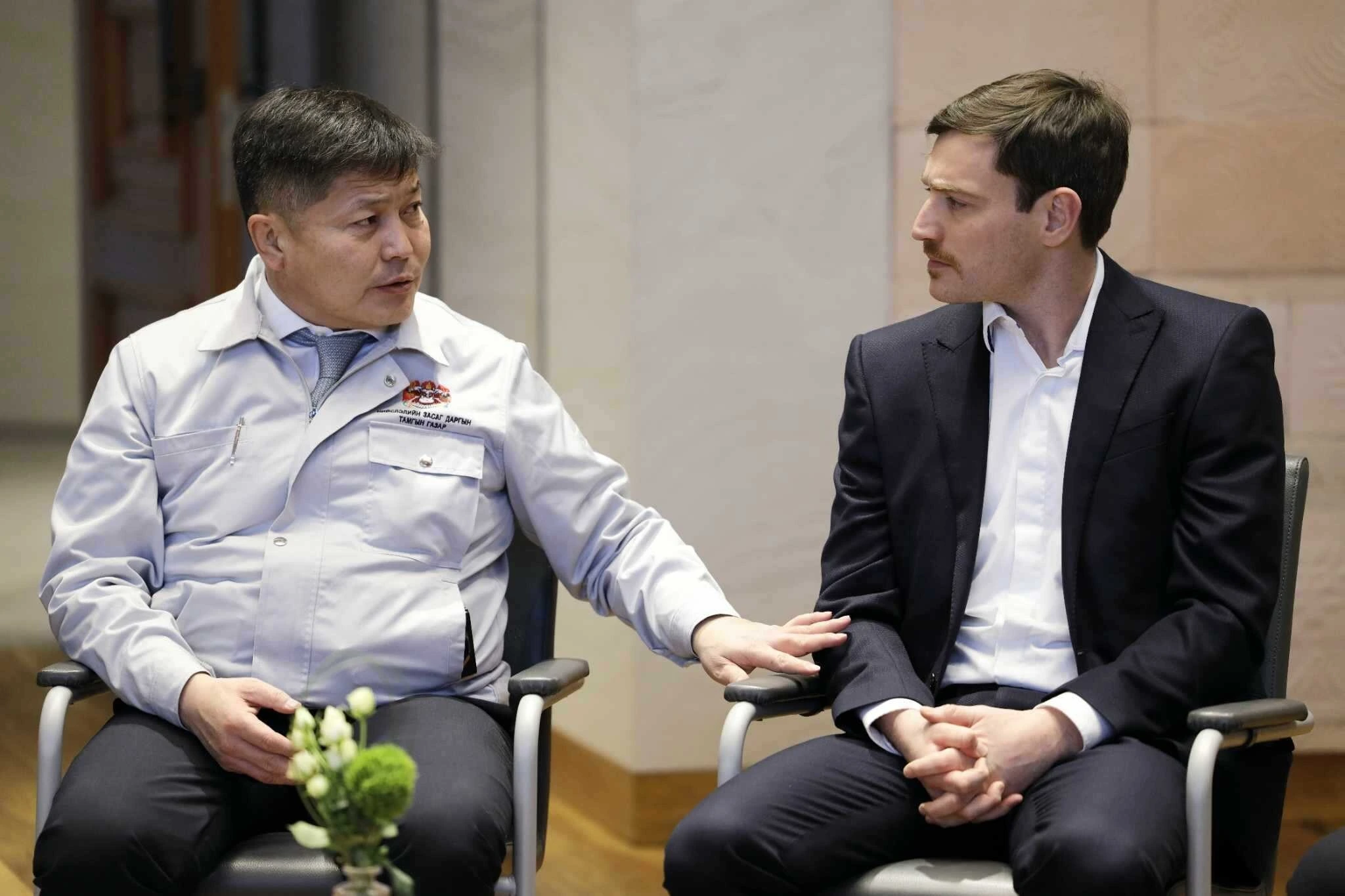
Main image: The Mayor of Ulaanbaatar, H. Nyambaatar and Nick Blair, Chairman of Skyral. Photo: PRNewsfoto/Skyral
TOP STORIES
-
 British buyers fuel Greek luxury property boom after non-dom tax change
 -
 New York named world’s most attractive city for tourists
 -
Saab lands German frigate deal after Poland submarine order
-
Students unveil world’s first solar-powered ambulance
-
Burnham told to tackle Britain’s cyber weak spots on day one
-
Doctors using AI before health systems set the rules
-
Humanoid robots could become the next K-pop stars
-
Hormuz flashpoint keeps global shipping on high alert
-
Scientists to gather in Lisbon to tackle next pandemic threats
-
Burnham warned digital exclusion is now a national security risk
-
Masts from Kent ‘doomsday wreck’ to be cut to prevent catastrophic explosion
-
GigaCloud and Cubbit launch sovereign cloud storage for Ukraine and Poland
-
Tributes paid to ‘forthright and fearless’ Ann Widdecombe
-
Boeing to debut Ghost Bat drone at Farnborough Airshow
-
Reeves opens ‘£2bn lifeline’ for small firms
-
Babymoon boom: Rhodes crowned 2026's top pre-baby escape as Salcombe leads UK getaway list
-
Xavier Niel to become Vodafone’s largest shareholder in £4.4bn deal
-
Two-thirds of lawyers say strong legal claims are dropped because of cost
-
UK government must "think again" about small business plan
-
Lockheed Martin pushes European missile expansion at NATO summit
-
Britain's new homes face 2050s heat test as experts warn of overheating crisis
-
Sky agrees £1.6bn deal to buy ITV’s broadcasting and streaming arm
-
Scientists crack dinosaur egg mystery by building life-size nest
-
Nobel laureate Omar Yaghi launches global science network
-
Cardiff drivers safest in Britain as London comes last