Europe’s leading defence powers launch joint drone and autonomous systems programme

John E. Kaye
- Published
- News
France, Germany, Italy, Poland and the UK agree new initiative aimed at scaling production of low-cost military platforms amid strategic and industrial pressures
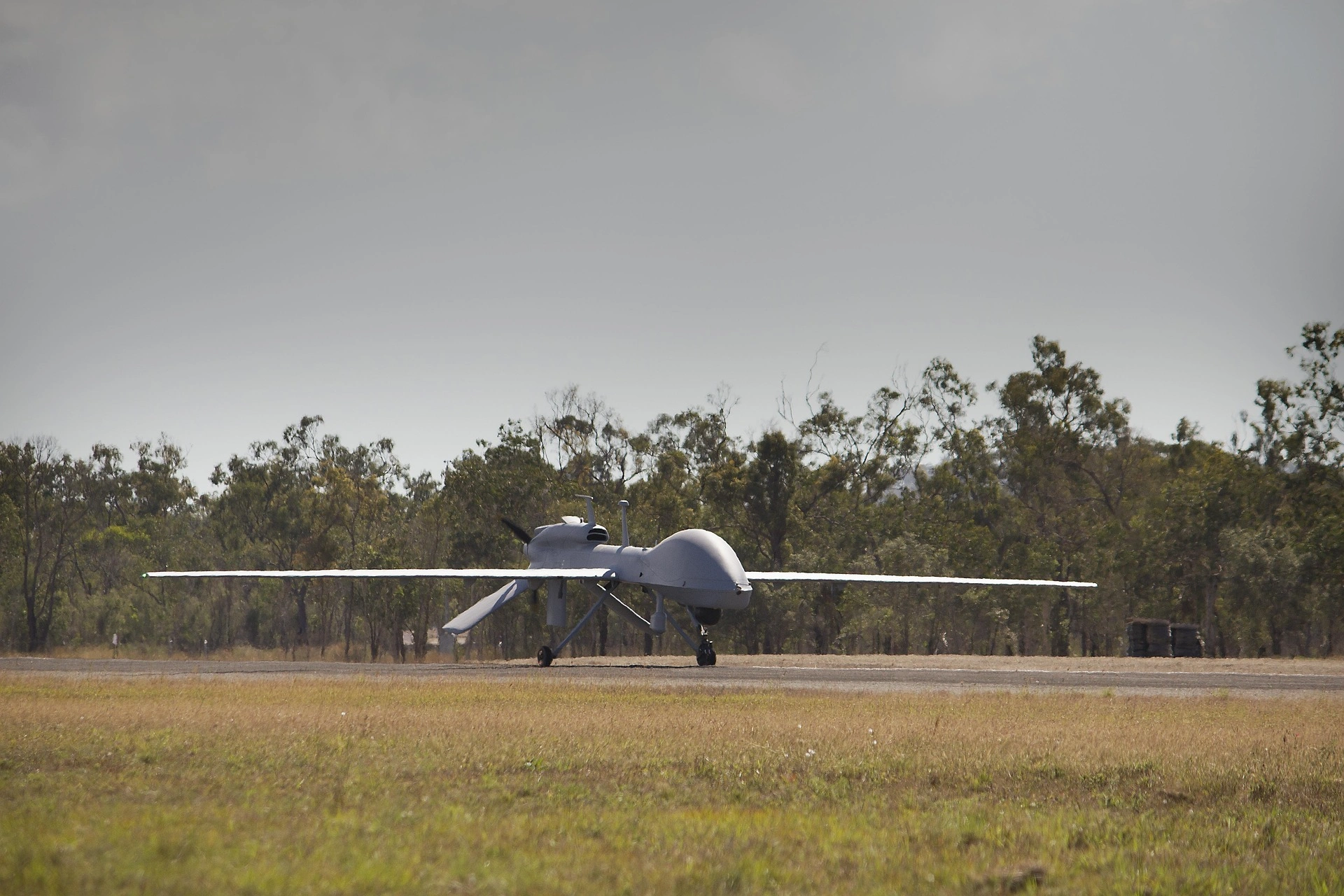
Europe’s five largest defence powers have agreed to strengthen cooperation on the development and procurement of military drones and autonomous systems, launching a new industrial initiative designed to accelerate production and reduce fragmentation across national programmes.
France, Germany, Italy, Poland and the United Kingdom announced the creation of the Low-Cost Effectors and Autonomous Platforms (LEAP) initiative following a meeting of defence ministers in Krakow.
The programme is intended to coordinate the development and acquisition of “low-cost effectors” — the components that deliver operational capability — and unmanned platforms capable of operating with varying degrees of autonomy. The focus is on scalable, cost-effective systems that can be deployed rapidly and in significant volumes.
In a joint statement, ministers said the initiative would increase cooperation on development and procurement in order to “deliver military effect” more efficiently, while strengthening Europe’s defence industrial capacity.
The announcement comes amid continued reassessment of Europe’s defence posture following Russia’s invasion of Ukraine and alongside the European Commission’s action plan on drone and counter-drone security, which sets out measures to strengthen detection, resilience and industrial capacity across member states.
Drones and autonomous systems have played a central role in modern conflict, offering comparatively inexpensive alternatives to traditional missile and air-defence platforms. Their battlefield effectiveness has prompted European governments to accelerate efforts to expand domestic production and reduce reliance on non-European suppliers.
The LEAP initiative is also positioned as an industrial measure. European defence procurement has historically been fragmented, with national programmes developed in parallel and often duplicating capability, a challenge repeatedly highlighted by the European Defence Agency. Closer coordination could generate economies of scale, improve interoperability and shorten development timelines.
Ministers welcomed recent European Union measures granting member states greater fiscal flexibility for defence spending, while emphasising that defence capabilities remain a national responsibility.
Analysts say the success of the programme will depend on sustained political commitment, alignment of technical standards and clarity over funding mechanisms. Previous multinational defence projects have faced delays due to divergent requirements and export restrictions.
From an industrial perspective, deeper collaboration in autonomous systems could strengthen Europe’s competitive position in a sector where the United States and China have invested heavily. Defence companies specialising in robotics, artificial intelligence and electronic systems may benefit from increased demand and cross-border procurement opportunities.
The move reflects a broader shift in European policy towards reinforcing strategic autonomy in key sectors, as defence spending across Europe has risen sharply in recent years, according to data from SIPRI.
READ MORE: ‘AI-powered drones market to triple by 2030, driven by defence, logistics and agriculture‘. The global market for artificial intelligence (AI) in drones is forecast to grow from $821.3 million in 2025 to $2.75 billion (£2.13 billion) by 2030, according to a new industry report. The projection represents a compound annual growth rate (CAGR) of 27.4% over the five-year period, making it one of the fastest-growing areas of the aerospace and defence sector.
Do you have news to share or expertise to contribute? The European welcomes insights from business leaders and sector specialists. Get in touch with our editorial team to find out more.
Main image: Military_Material/Pixabay
TOP STORIES
-
 British buyers fuel Greek luxury property boom after non-dom tax change
 -
 New York named world’s most attractive city for tourists
 -
Saab lands German frigate deal after Poland submarine order
-
Students unveil world’s first solar-powered ambulance
-
Burnham told to tackle Britain’s cyber weak spots on day one
-
Doctors using AI before health systems set the rules
-
Humanoid robots could become the next K-pop stars
-
Hormuz flashpoint keeps global shipping on high alert
-
Scientists to gather in Lisbon to tackle next pandemic threats
-
Burnham warned digital exclusion is now a national security risk
-
Masts from Kent ‘doomsday wreck’ to be cut to prevent catastrophic explosion
-
GigaCloud and Cubbit launch sovereign cloud storage for Ukraine and Poland
-
Tributes paid to ‘forthright and fearless’ Ann Widdecombe
-
Boeing to debut Ghost Bat drone at Farnborough Airshow
-
Reeves opens ‘£2bn lifeline’ for small firms
-
Babymoon boom: Rhodes crowned 2026's top pre-baby escape as Salcombe leads UK getaway list
-
Xavier Niel to become Vodafone’s largest shareholder in £4.4bn deal
-
Two-thirds of lawyers say strong legal claims are dropped because of cost
-
UK government must "think again" about small business plan
-
Lockheed Martin pushes European missile expansion at NATO summit
-
Britain's new homes face 2050s heat test as experts warn of overheating crisis
-
Sky agrees £1.6bn deal to buy ITV’s broadcasting and streaming arm
-
Scientists crack dinosaur egg mystery by building life-size nest
-
Nobel laureate Omar Yaghi launches global science network
-
Cardiff drivers safest in Britain as London comes last