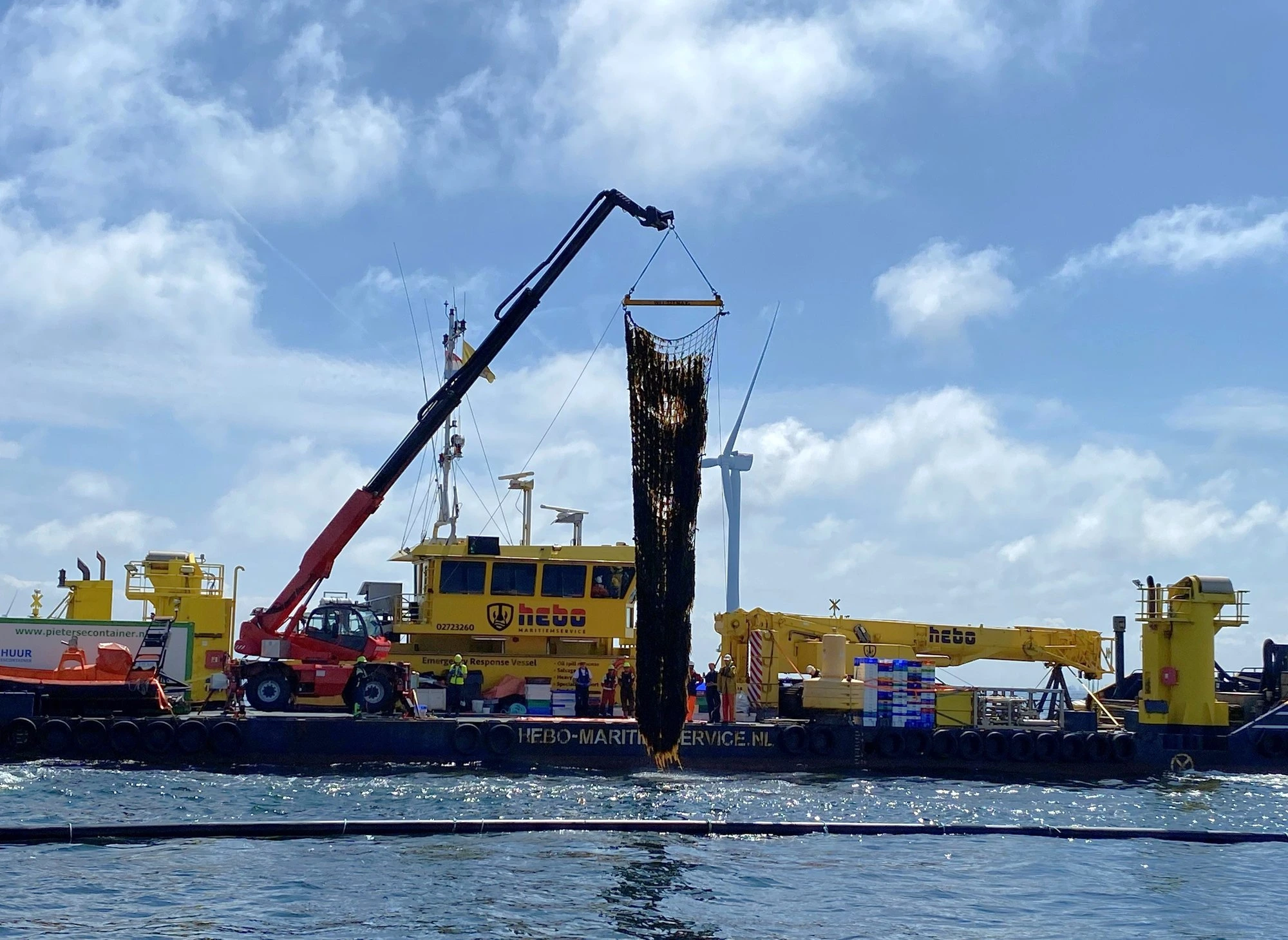
In a quiet corner of the North Sea, something remarkable is happening between the towering blades of offshore wind turbines: farmers are growing seaweed
This week, the world’s first large-scale seaweed farm built inside a wind farm has completed its first harvest in a development that scientists say could be the beginning of a whole new kind of climate solution.
The project, called North Sea Farm 1, sits off the coast of Scheveningen in the Netherlands. From the surface, it looks like any other offshore wind installation. But suspended beneath the waves are long lines seeded with fast-growing seaweed, stretching across five hectares of water — roughly the size of seven football pitches.
Seaweed may not sound revolutionary, but researchers believe it could play a serious role in tackling the climate and biodiversity crises. Like plants on land, seaweed absorbs carbon dioxide as it grows. And because it doesn’t need fertiliser, fresh water or farmland, it could help ease pressure on overstretched agricultural systems while creating habitats for marine life at the same time.
Crucially, the farm makes use of space that would otherwise go unused. Offshore wind farms are off-limits to shipping and fishing, meaning the seaweed lines can grow undisturbed in the gaps between the turbines.
The farm was created by North Sea Farmers with €2 million funding from Amazon’s Right Now Climate Fund.
Speaking yesterday, Eva Faict, Amazon’s Netherlands and Belgium country manager, said: “The inaugural harvest of North Sea Farm 1 is a significant moment.
“Together with North Sea Farmers, we have proven that cultivated seaweed farming among offshore wind turbines is a viable commercial concept.”
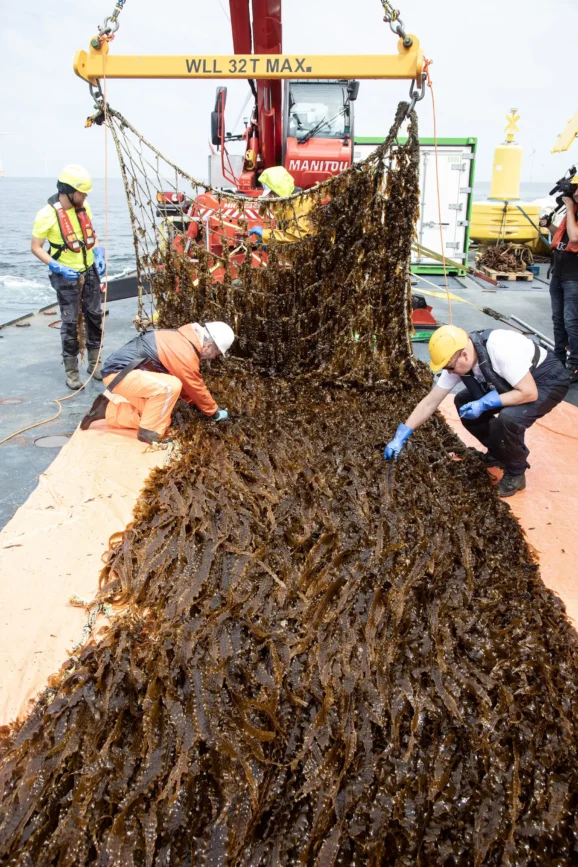
The harvesting process involves the use of a specially adapted vessel that sails between the turbines and collects seaweed from nets anchored to the seabed.
For scientists, this first harvest is the start of a detailed investigation into what seaweed farming can offer the planet.
Teams from Plymouth Marine Laboratory, Deltares, and Silvestrum Climate Associates have been tracking the project with satellite data and site visits, measuring how much carbon the seaweed captures and how it affects the surrounding ecosystem.
Professor Ana M Queirós, Plymouth Marine Laboratory’s Climate Change Lead, said: “We’re very excited to understand the effects of the seaweed farm on the immediate and surrounding marine environment. Our analysis will follow the carbon from the seawater into the seaweed and the environment, and any effects on biodiversity.
“It’s vital projects like this are underpinned with rigorous scientific evidence, particularly given the urgency of the climate and biodiversity crisis and the need to find scalable mitigation measures that produce genuinely beneficial and sustainable outcomes.”
According to Eef Brouwers, Managing Director of North Sea Farmers, the goal is to show that offshore seaweed farming can also be done at commercial scale.
“Through ongoing scientific research, we aim to demonstrate whether farms like this can have a positive long-term impact on both biodiversity and climate change mitigation,” he said. “At the same time, we’re proving that seaweed production within an existing offshore infrastructure is possible at a commercial scale.”
Main image: Harvest at world’s first commercial-scale seaweed farm located between wind turbines provides researchers with valuable insights into seaweed cultivation. Credit: North Sea Farmers