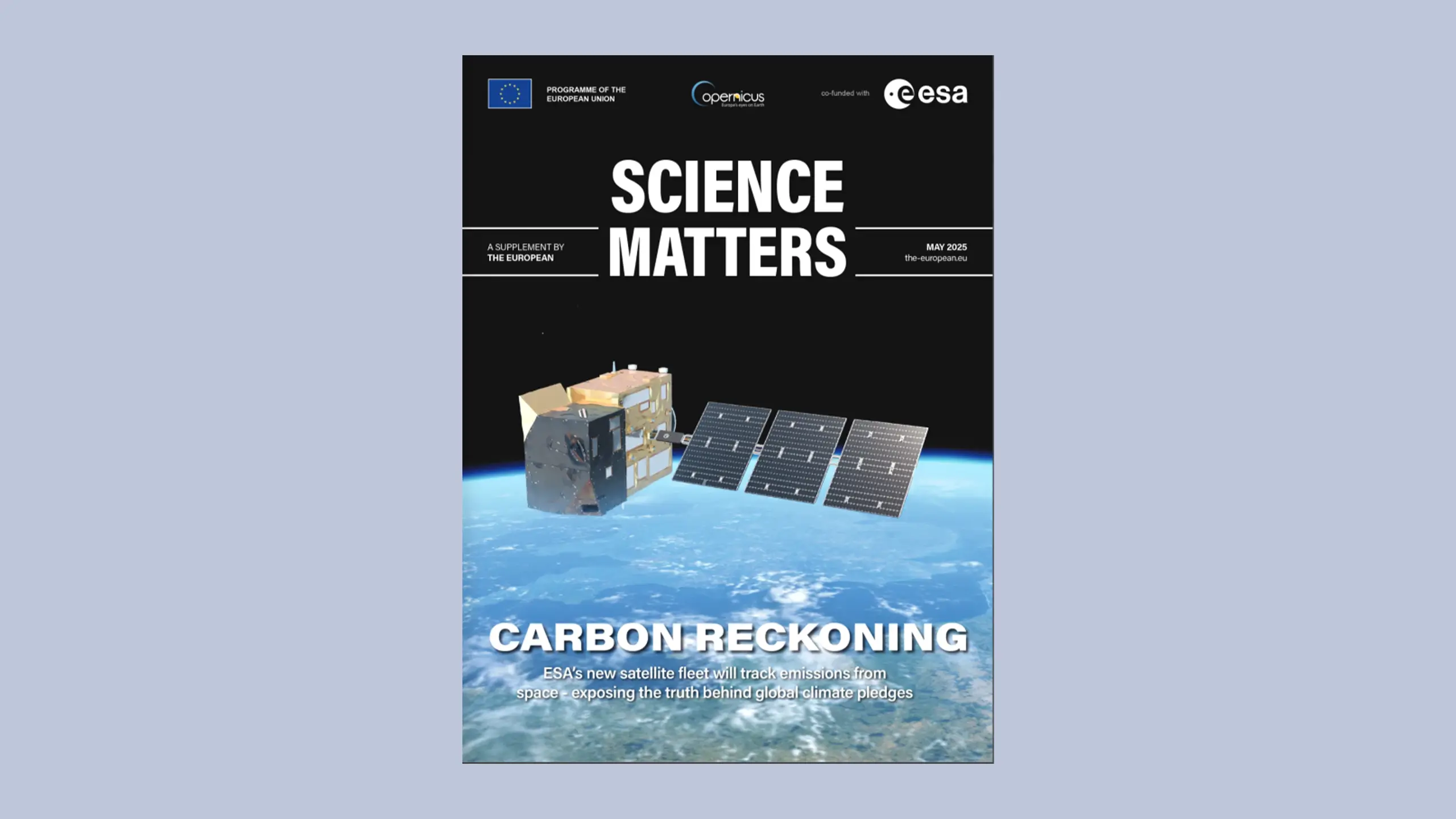
Our latest supplement brings together the brightest minds shaping science in Europe and beyond
From cutting-edge satellites tracking carbon emissions to radical battery breakthroughs and the cognitive cost of AI, the Spring 2025 edition of Science Matters is out now.
This special supplement brings together a series of exclusive features, profiles and thought-leadership essays exploring the science that will define our future—and the people driving it forward.
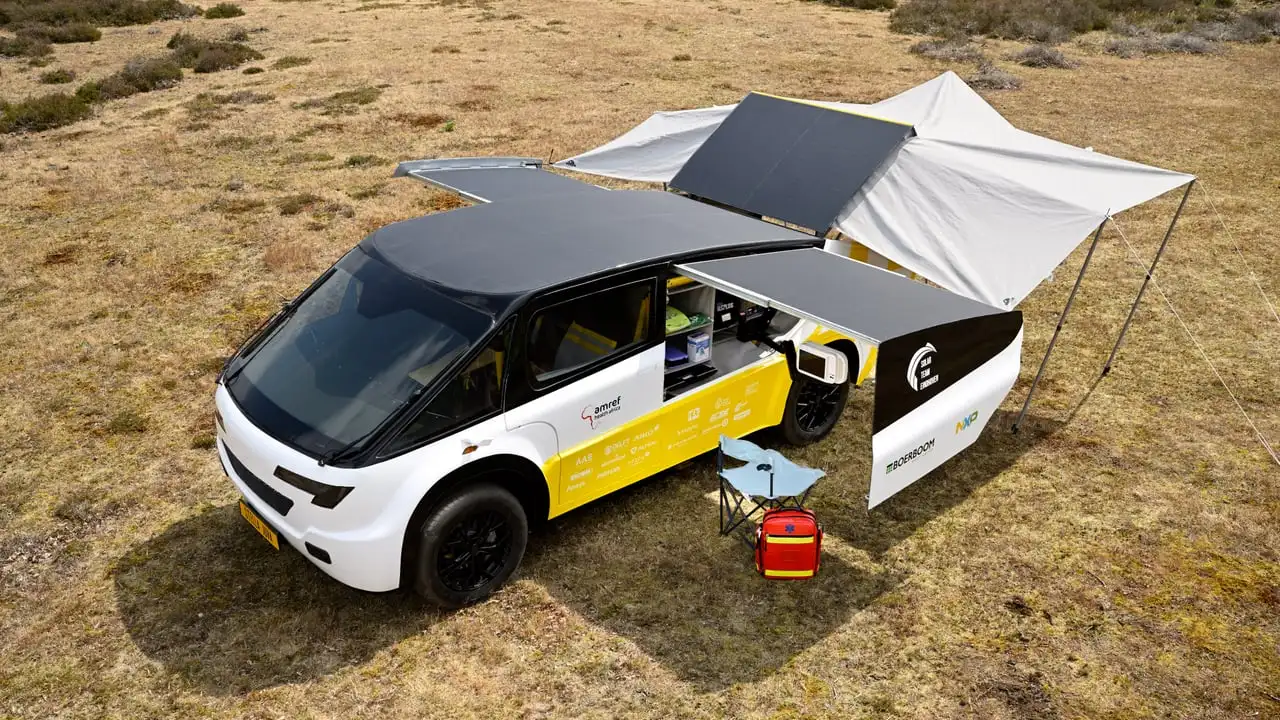
We begin in orbit, with the European Space Agency’s CO₂M mission. Dr Yasjka Meijer explains how a new satellite constellation will deliver real-time emissions data capable of exposing pollution hotspots at the level of individual cities, power plants and industrial zones—offering a potential turning point in the global response to climate change.
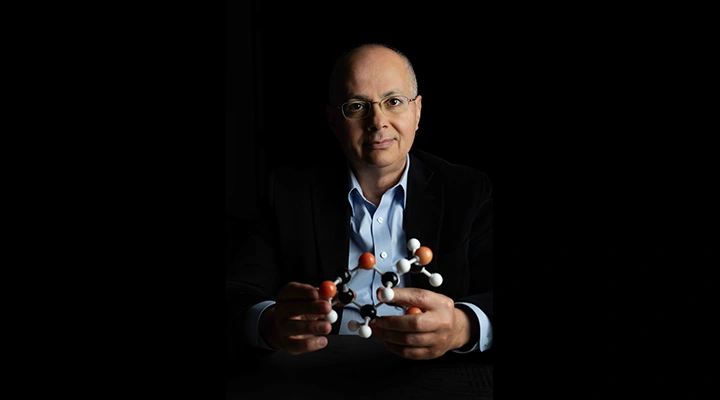
In Michigan, chemist Dr Tom Guarr introduces us to an organic battery made without lithium, cobalt or vanadium, using molecules instead of metals to build a safer, cheaper and more sustainable energy storage solution. It could change how we power everything from homes to electric grids.
Meanwhile in Switzerland, Dr Sarah Chardonnens challenges the AI industry to rethink how intelligent systems interact with the human brain. Her SYNAPSE model lays out a neuroscience-based framework for designing AI that supports human learning—rather than bypassing it—and is already influencing how digital learning tools and medical systems are being built.
Global health also takes centre stage. Professor Geoffrey Dusheiko issues a stark warning about the hidden toll of hepatitis B in sub-Saharan Africa, where a simple $1 test could save hundreds of thousands of lives each year, but is still being overlooked by many health systems.
We also spotlight the invisible rituals that shape society, with historian Professor Penelope J. Corfield revealing the surprising origins of everyday gestures like the handshake and the fist bump. Her research draws direct links between small social customs and deep structural shifts in class, power and urbanisation.
From human behaviour to advanced materials, we meet Professor Konstantina Lambrinou, whose work on accident-tolerant nuclear fuels may hold the key to safer reactors on Earth—and energy supply for future missions beyond it. Her contribution to the international HORIZON SCORPION project shows how materials science is being pushed to its limits in the name of global energy security.
Elsewhere, compensation analyst Stephen F. O’Byrne explores why the world’s biggest asset owners are still failing to link CEO pay with genuine performance, despite having access to more data than ever. His four-part framework offers a new way of thinking about incentives, value, and long-term accountability.
Finally, Dr Andreas Kluge, founder of multiple European biotech companies, calls for a reset in the way science is funded and rewarded. His essay warns that when profit outweighs purpose, true innovation suffers—and argues for a return to long-term, collaborative thinking that places scientific integrity above short-term gain.
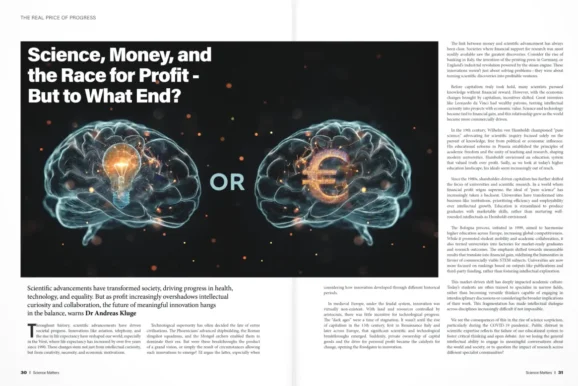
What unites these diverse stories is a shared commitment to scientific excellence and a belief that knowledge must serve people, not just profit. As the leader article makes clear: this is Europe at its best: open, visionary, and collaborative.
Read our Science Matters supplement here.