Germany bucks Europe’s high-growth surge as continent sees strongest expansion in five years

John E. Kaye
- Published
- News
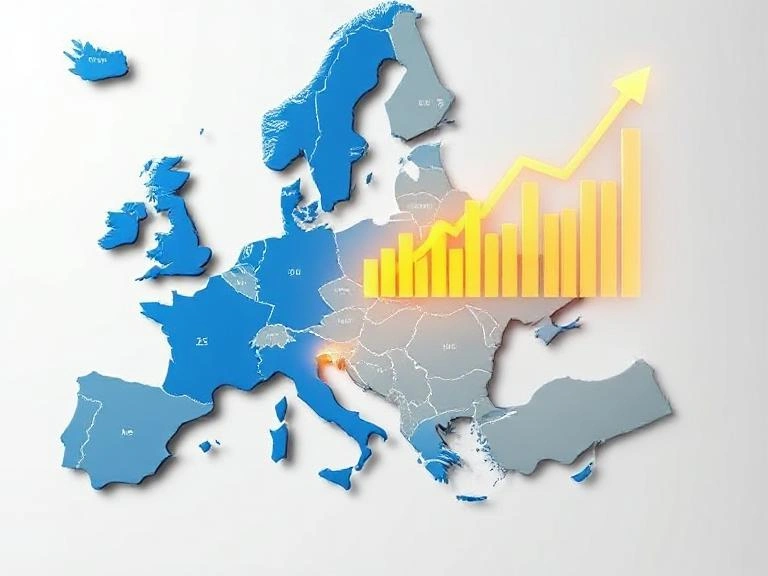
Europe’s scale-up ecosystem is surging back to pre-pandemic strength — but while Nordic and southern nations lead the recovery, Germany and a handful of others are slipping behind
The number of European firms achieving annual growth above 20 per cent has reached its highest level in five years, according to new research — but Germany remains a notable outlier amid a continent-wide resurgence.
The 2025 European Scaleup Monitor, which analysed 2.1 million business entities across the EU, found that more than five per cent of firms now qualify as High-Growth Companies, marking the strongest performance since before the pandemic.
Researchers categorised businesses into eight groups based on their employee growth rates over a three-year period, ranging from steady-expanding “Scalers” to repeatedly fast-growing “Consistent Hypergrowers”, as well as age-based distinctions between younger “Gazelles” and more established “Superstars”.
The report identifies the Nordic countries — Finland, Denmark and Sweden — together with Ireland, the Netherlands, Italy, Spain and Portugal as the most consistent top performers across multiple growth categories.
Ireland and Spain recorded the largest annual increases in scaler firms between 2022 and 2023, while the Baltic states and Slovenia emerged as key hubs for younger ventures, with a rapid rise in so-called Gazelles — firms under ten years old that are expanding rapidly and could become Europe’s next generation of unicorns.
In contrast, Germany, Bulgaria and Malta all registered a decline in the share of scaling firms compared with 2022, with Germany posting the steepest contraction among the EU-27.
Despite this, the overall European picture was described as one of broad recovery and renewed dynamism following the disruption of COVID-19.
“The latest findings show that Europe’s scaleup ecosystem is bouncing back stronger than ever, but growth is far from uniform,” Professor Veroniek Collewaert, Professor of Entrepreneurship at Vlerick Business School, said. “While some regions are driving remarkable momentum, others lag behind.
“The real challenge for policymakers is not only to sustain this growth but to ensure it spreads more evenly. That means identifying what works in the high-performing regions, fostering the right conditions for young and established firms alike, and creating a shared roadmap so that Europe can turn isolated successes into a lasting, continent-wide engine of innovation and economic resilience.”
The strongest high-growth activity was found in services sectors, particularly Information and Communication and Administrative and Support Services.
Meanwhile, Accommodation and Food Services, one of the sectors hardest hit by the pandemic, showed the largest year-on-year rebound, expanding more than 12 per cent and surpassing pre-Covid growth levels.
The study concludes that European policymakers should use regional data to identify best practices, support emerging ecosystems in Eastern Europe, and address the stagnation in countries such as Germany, Bulgaria and Malta with targeted policy responses.
The European Scaleup Monitor is produced by the European Scaleup Institute, whose partners include Vlerick Business School, ESSEC Business School, Erasmus University Rotterdam, WHU – Otto Beisheim School of Management, ESADE, NOVA School of Business and Economics, Luiss Business School, and the University of Galway.
READ MORE: ‘New ranking measures how Europe’s biggest retailers report on sustainability’. First CSR Retail Index finds Carrefour, Eroski and Jerónimo Martins out in front as EU tightens disclosure rules.
Do you have news to share or expertise to contribute? The European welcomes insights from business leaders and sector specialists. Get in touch with our editorial team to find out more.
TOP STORIES
-
 British buyers fuel Greek luxury property boom after non-dom tax change
 -
 New York named world’s most attractive city for tourists
 -
Saab lands German frigate deal after Poland submarine order
-
Students unveil world’s first solar-powered ambulance
-
Burnham told to tackle Britain’s cyber weak spots on day one
-
Doctors using AI before health systems set the rules
-
Humanoid robots could become the next K-pop stars
-
Hormuz flashpoint keeps global shipping on high alert
-
Scientists to gather in Lisbon to tackle next pandemic threats
-
Burnham warned digital exclusion is now a national security risk
-
Masts from Kent ‘doomsday wreck’ to be cut to prevent catastrophic explosion
-
GigaCloud and Cubbit launch sovereign cloud storage for Ukraine and Poland
-
Tributes paid to ‘forthright and fearless’ Ann Widdecombe
-
Boeing to debut Ghost Bat drone at Farnborough Airshow
-
Reeves opens ‘£2bn lifeline’ for small firms
-
Babymoon boom: Rhodes crowned 2026's top pre-baby escape as Salcombe leads UK getaway list
-
Xavier Niel to become Vodafone’s largest shareholder in £4.4bn deal
-
Two-thirds of lawyers say strong legal claims are dropped because of cost
-
UK government must "think again" about small business plan
-
Lockheed Martin pushes European missile expansion at NATO summit
-
Britain's new homes face 2050s heat test as experts warn of overheating crisis
-
Sky agrees £1.6bn deal to buy ITV’s broadcasting and streaming arm
-
Scientists crack dinosaur egg mystery by building life-size nest
-
Nobel laureate Omar Yaghi launches global science network
-
Cardiff drivers safest in Britain as London comes last