Peer-reviewed research has revealed that African ebony trees cannot survive without elephants. The discovery, years in the making, carries widespread implications for guitars, pianos and the wider music industry, and highlights the urgent need for conservation in the Congo Basin
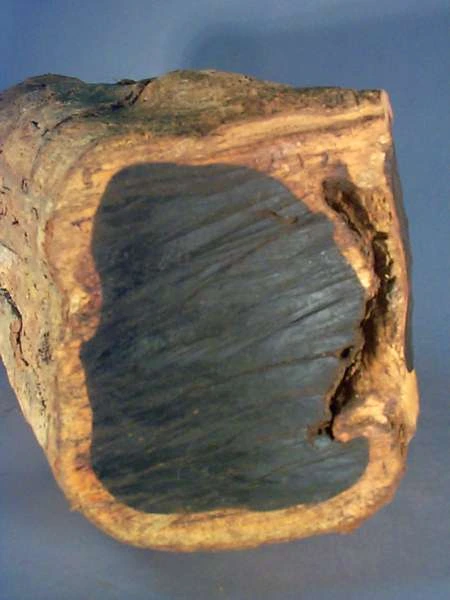
Ebony has shaped the sound of music for centuries. Its dense, dark timber gives guitars their fingerboards, pianos their black keys and classical stringed instruments their fittings. But this prized wood is now at risk, and its future depends on an unlikely guardian: the African forest elephant.
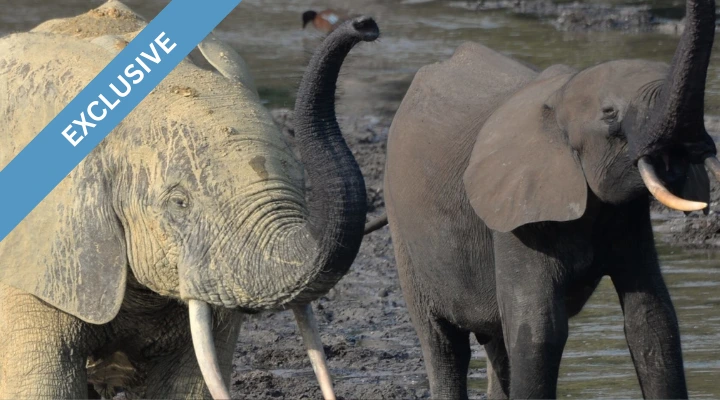
Groundbreaking research published in Science Advances has shown that ebony trees (Diospyros crassiflora Hiern) rely on elephants for reproduction and survival. The study, conducted in Cameroon, found that elephants are the principal dispersers of ebony seeds. Without them, ebony populations collapse.
The findings emerged from The Ebony Project, a conservation initiative launched by Taylor Guitars co-founder Bob Taylor in 2016, in partnership with the Congo Basin Institute.
What began as a tree-planting programme has evolved into a scientific discovery with global cultural and economic significance.
In 2016, Bob Taylor met Dr. Tom Smith, a UCLA conservation biologist, in Yaoundé, Cameroon. The meeting, arranged by the U.S. Ambassador to Cameroon, who knew both men, led Taylor to fund The Ebony Project.
“When I met Tom Smith eight years ago, I never imagined that Taylor Guitars’ commitment to responsible ebony sourcing would lead to discoveries about elephant poop,” Taylor said. “But that’s exactly what happened, and the implications are profound for both conservation and the future of guitar making.”

The research team, led by Dr. Vincent Deblauwe of The Ebony Project, found that ebony seeds passing through an elephant’s digestive system are more likely to germinate and are better protected against rodents.
The animals also carry seeds far from the parent tree, ensuring healthy genetic diversity in the forest.
The research team, led by Dr. Vincent Deblauwe of The Ebony Project, found that ebony seeds passing through an elephant’s digestive system are more likely to germinate and are better protected against rodents.
“When we did forest inventories to identify where ebony seedlings, saplings and trees grew, we weren’t expecting to see large geographic differences,” Dr. Deblauwe said.
“But there was an obvious line between protected regions and hunted regions, with practically no young saplings in the parts of the forest without elephants. The few saplings we found there were clustered below the parent trees, as if no animals ever came to eat the fruits and disperse the seeds.”
A parallel analysis by UCLA scientists reinforced this picture. They recorded 68 per cent fewer young ebony saplings in forests where elephants had been hunted out. In those areas, the trees that did survive showed worrying signs of inbreeding, with fewer seedlings and limited genetic variation.

African forest elephants, described by scientists as the “gardeners of the rainforest”, once roamed much of Central Africa. Today their numbers have fallen to just one-third of their historical range due to poaching and habitat loss.
Taylor said protecting elephants is essential for the future of musical instruments, because they play a critical role in sustaining the ebony used in guitar fingerboards.
He added: “Almost every guitar ever produced includes an ebony fingerboard.
“If guitar players want ebony fingerboards in the future, they need to support elephant conservation in the Congo Basin today.”
Since its inception, The Ebony Project has planted more than 40,000 ebony trees and 20,000 fruit trees, far surpassing its original targets.
Cameroonian agroforestry expert Dr. Zac Tchoundjeu proposed planting fruit trees alongside ebony to support local food security, ensuring that communities benefited as well as forests.
The project has drawn international attention and attracted funding from the Global Environmental Facility and the Franklinia Foundation. Coverage has appeared in National Geographic, Forbes, Reuters and the BBC.
Despite these achievements, the challenges remain. In the project’s current planting areas, near the Dja Faunal Reserve, elephants have not been seen in decades. Future phases hope to extend into regions where elephants still survive, creating corridors that might reconnect the animals with the trees that depend on them.
Main image: Taylor Guitars Conservation Partnership reveals critical link between African forest elephants and guitars. Photo: Richard Rosomoff (PRNewsfoto/Taylor Guitars)