Brussels says fields, forests and scrubland must become harder to burn, with more mixed terrain, restored ecosystems and less unmanaged fuel, after more than one million hectares were scorched in Europe’s worst fire year on record
Plans to make Europe’s tinderbox landscapes less prone to wildfires have been unveiled by the European Commission.
Under plans released this week, Brussels wants to create less flammable terrain by reshaping fields, forests and shrubland so fire finds it harder to spread.
Instead of long, uninterrupted stretches of dry vegetation, landscapes in the hottest parts of the continent would be reworked into more mixed woodland and open-ground patchworks.
The Commission said healthier ecosystems were more resilient to fire, with nature protection and restoration central to the strategy.
It said the aim is to mitigate wildfire risk through better landscape planning and by reducing the build-up of combustible vegetation.
That could involve more active management of forests and scrub, stronger protection of natural areas that help retain moisture in the landscape, and more deliberate breaks between woodland, grassland, farmland and settlements.
Land broken up into sections can slow the path of a fire, while one continuous sweep of fuel is more dangerous.
The Commission said Europe suffered its worst wildfire season since records began in 2025, with more than one million hectares burned, and warned that hotter, larger and more frequent blazes are likely to worsen across the continent.
Europe cannot rely on water-carrying aircraft and firefighters alone to extinguish flames if its landscapes do not become more fire-resilient, it said.
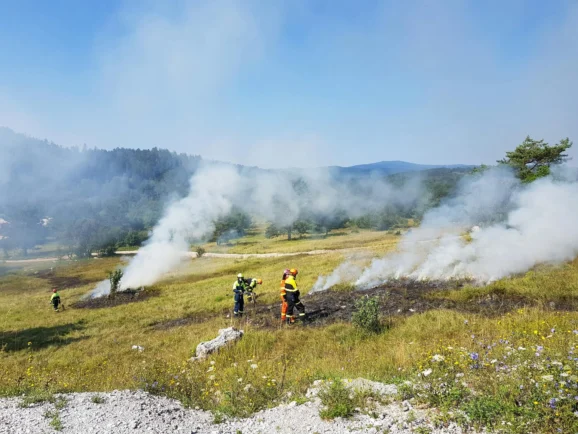
The Commission today adopted new guidance on Natura 2000 sites and climate change, which it said would help Member States plan protected sites in ways that reduce wildfire risk while remaining compatible with conservation objectives.
The guidance also sets out what flexibility countries have in emergencies such as wildfires, when rapid action may be needed to protect both people and biodiversity.
Jessika Roswall, Commissioner for Environment, Water Resilience and a Competitive Circular Economy, said: “Wildfires are becoming more ferocious and more destructive across Europe, with catastrophic consequences for our lives, environment and economies.
“It shows how our economic resilience is directly linked to the health of our ecosystems, and how protecting one, protects the other. By investing in prevention, restoring nature and creating fire-resilient landscapes, we can avoid economic damage worth billions of euros.”
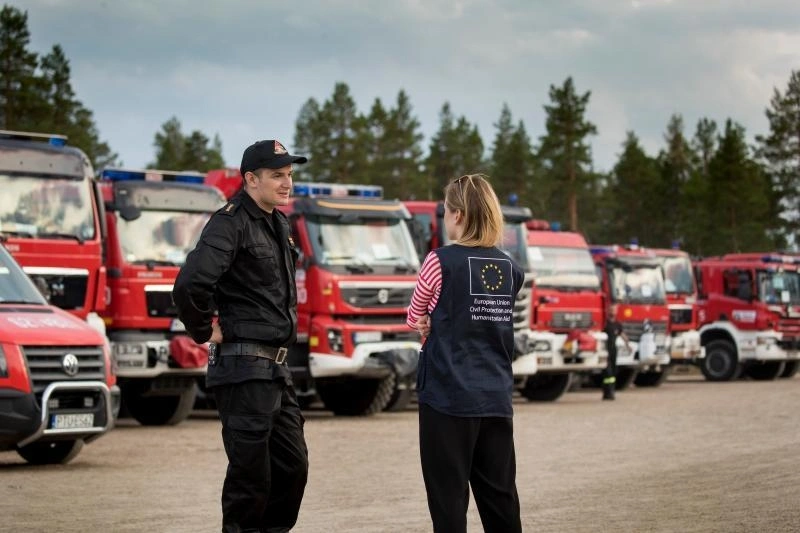
The broader package still includes the traditional emergency measures. The Commission said the rescEU firefighting fleet would be expanded with 12 firefighting planes and five helicopters, while the first rescEU helicopter, delivered to Romania in January 2026, would be ready for this year’s wildfire season.
It is also working on a European firefighting hub in Cyprus, intended to serve as a regional centre for training, exercises and seasonal readiness as well as emergency response.
Other measures include updated risk assessment guidelines, improved fire monitoring and early warning through the European Forest Fire Information System and Copernicus, and further work on AI-assisted wildfire modelling.
READ MORE: ‘EXCLUSIVE: LA unveils Ghostbusters-style car to fight post-wildfire ‘toxic soup’. A futuristic autonomous clean-air unit designed to suck dangerous pollution out of the air is being pitched as Los Angeles’s answer to the post-wildfire ‘toxic soup’ of soot, microplastics and heavy metals.
Do you have news to share or expertise to contribute? The European welcomes insights from business leaders and sector specialists. Get in touch with our editorial team to find out more.
Main image: Credit – European Union