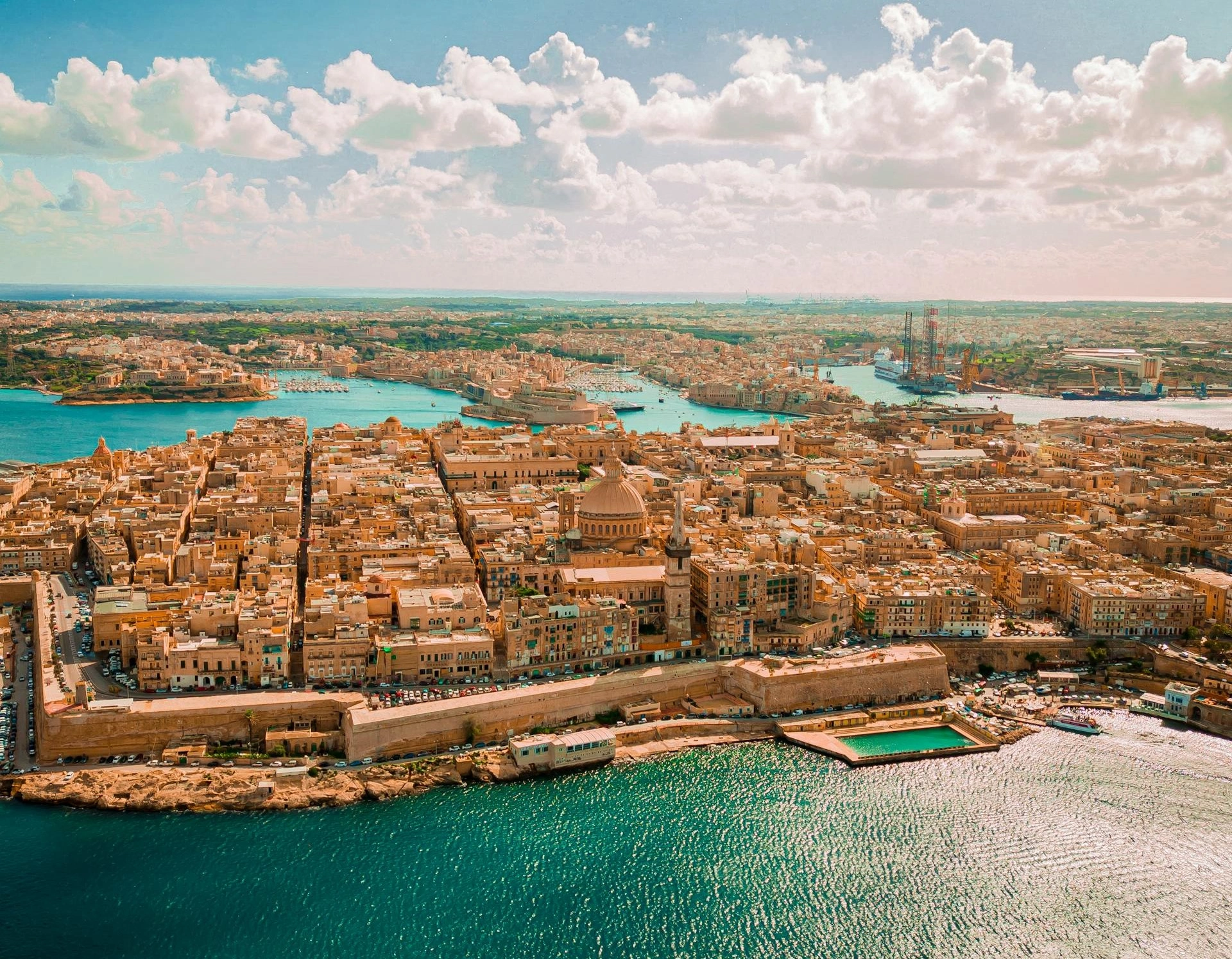
Film crews, A-list actors and major franchises have turned Valletta into one of Europe’s most recognisable on-screen cities, with locations used in Game of Thrones, Jurassic World and World War Z sitting inside a top-ranked capital packed with history, food and stunning diving, discovers John E. Kaye
Valletta might be one of Europe’s smallest capital cities, but it has become one of the most recognisable places on screen. Hollywood blockbusters and major television series have used its streets, squares and fortifications as stand-ins for ancient cities, war zones and imagined kingdoms. Scenes from Game of Thrones, Gladiator, World War Z and Jurassic World were filmed in and around the Maltese capital.
That cinematic appeal is rooted in Valletta’s origins. The city was founded in 1566 by the Knights of St John following their defeat of the Ottoman Empire during the Great Siege of Malta. Built as a fortified city from the outset, Valletta was designed to project military strength and administrative control. Its grid layout, thick limestone walls, bastions and sea-facing ramparts were practical responses to siege warfare rather than decorative planning, which explains why the city reads so clearly on camera centuries later.
That profile was reinforced this year when Condé Nast Traveller readers voted Valletta the best city to visit in Europe, placing it ahead of Paris, Rome and Barcelona. The ranking was based on overall satisfaction, with Valletta scoring highest for its compact scale, walkable streets, preserved historic fabric and immediate access to the sea.
Valletta is a great year-round destination, but January and February are among the most practical months for a short break. Visitor numbers drop sharply after Christmas, streets are noticeably quieter, museums can be explored without queues and tables at popular restaurants are easier to secure. Daytime temperatures typically sit in the mid-teens, which makes it comfortable to walk the city’s steep streets while avoiding the heat that dominates much of the year.
Things to See and Do
Covering just over half a square kilometre, Valletta is compact and clearly laid out. Streets follow a simple grid and the Grand Harbour sits alongside the city, making it easy to understand where you are at any point. Most major sights sit within walking distance of one another, too, which makes it possible to pack in a large amount in a limited time.
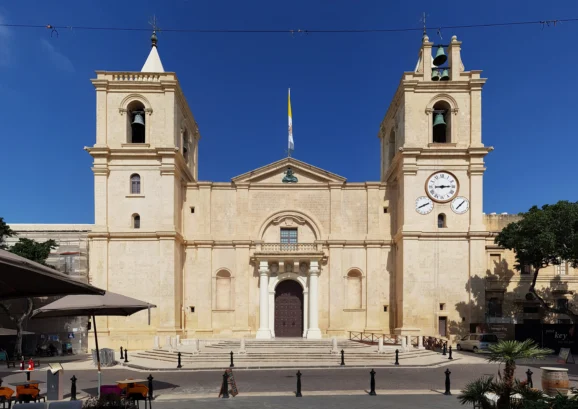
The central landmark is St John’s Co-Cathedral. Inside, the floor is made up of marble tombs marking the graves of the Knights of St John, each bearing heraldry and inscriptions. Side chapels reflect the different European orders that funded the cathedral. In the Oratory hangs Caravaggio’s The Beheading of Saint John the Baptist, painted while he was in Malta and still displayed in the room it was made for. Early January visits allow time to view the painting without large tour groups moving through the space.
Nearby, the Grand Master’s Palace explains how the city was governed. Rows of swords, firearms and full suits of armour show Valletta’s original role as a fortified headquarters rather than a decorative capital.
For orientation, Upper Barrakka Gardens sit above the harbour and look directly across to the Three Cities. The Saluting Battery fires daily. From here, the city’s defensive layout and control of maritime traffic are immediately clear.

At the tip of the peninsula, Fort St Elmo houses the excellent National War Museum. Displays cover the Knights’ period and Malta’s role during the Second World War, when the island was one of the most heavily bombed places in Europe. The surrounding ramparts are open and give views over both the Grand Harbour and the open Mediterranean.
Valletta also connects directly to neighbouring areas by water. Passenger ferries cross Marsamxett Harbour in minutes to Sliema, where the seafront, cafés and swimming access provide a contrast to Valletta’s density. From the same harbour, it is easy to reach Fort Manoel, an eighteenth-century fort built by the Knights of St John and later used as a filming location for Gladiator. The fort is open, lightly managed and rarely crowded.
Below street level, the Lascaris War Rooms show how Malta was run during sustained aerial bombardment in the Second World War. The tunnels remain intact, with original plotting tables, maps and communications rooms that explain how operations were coordinated.
Beyond the capital, Rabat lies around 30 minutes away by bus or taxi and is home to the Catacombs of St Paul. These underground burial chambers date from Roman Malta and extend beneath the modern town. Don’t worry, they’re not especially claustrophobic and are well-lit (and signposted) throughout.
For evening culture, Teatru Manoel continues to operate as a working theatre, staging concerts and visiting productions throughout winter. January also coincides with the Valletta Baroque Festival, which uses churches and historic buildings across the city as venues.
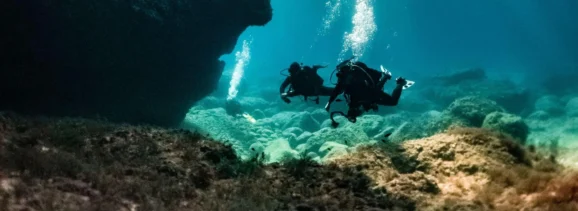
Alongside its historic sites on land, Valletta also gives access to a long, accessible stretch of coastline, making it a year-round diver’s paradise. Malta Blue Diving, a friendly dive centre in nearby Sliema, has exceptional shore dives on its doorstep and offers courses for beginners up to instructor level.
What to Eat
Maltese cooking reflects the island’s position between Sicily and North Africa and the long period of rule by the Knights of St John. Italian, Arabic, Spanish, French and British influences sit alongside older Mediterranean traditions, producing food that is practical, strongly flavoured and based on a small set of reliable ingredients rather than elaborate technique
Bread, olive oil, tomatoes, legumes and slow-cooked meats form the base of most meals. Ftira, a dense ring-shaped sourdough bread, is central. It is eaten split and filled with tuna, olives, capers and tomato, or baked flat with toppings in the Gozitan style. The bread is recognised by UNESCO as part of Malta’s intangible cultural heritage and appears across cafés, markets and bakeries rather than in formal restaurants
The most visible everyday food in Valletta is the pastizz. These small, flaky pastries are filled with ricotta or curried peas and sold from dedicated pastizzi shops, bakeries and street counters. They are inexpensive, widely eaten and treated as ordinary food rather than a speciality. Their ubiquity makes them one of the clearest markers of local eating habits.
Whatever you do, be sure to try stuffat tal-fenek, rabbit stewed with wine, garlic and tomato. Rabbit became a staple during the period of the Knights, when it was affordable and widely available, and remains Malta’s national dish. Bragioli, beef rolls stuffed with breadcrumbs, egg and herbs, are another standard cold-weather dish, braised and served as a main course.
Soups and bean dishes are equally important. Aljotta, a fish soup made with garlic, tomato, rice and lemon, draws on French bouillabaisse but is adapted to local fishing traditions and Catholic fasting rules. Bigilla, a thick paste made from mashed tic beans, garlic and olive oil, is served as a spread with bread or crackers and appears regularly as part of mixed platters
For visitors, the most efficient overview sits inside Is-Suq tal-Belt, Valletta’s central covered food market. The restored nineteenth-century building houses multiple independent food counters serving Maltese dishes alongside Mediterranean cooking. Seating is shared and informal, and menus rotate, making it possible to sample local food without committing to a long restaurant meal.
Maltese cuisine is also closely tied to the Catholic calendar. Certain sweets appear only at specific times of year, including kwareżimal, almond biscuits made for Lent, and figolla, marzipan-filled pastries baked for Easter. Christmas brings qagħaq ta’ l-għasel, ring-shaped pastries filled with spiced treacle, though they are now available beyond the festive period.
Evening eating in Valletta centres on small restaurants and taverns rather than formal dining rooms. Seafood kitchens sit alongside traditional Maltese establishments, particularly around Strait Street and nearby lanes.
Places to Stay
Valletta has an unusually high number of places to stay for a city of its size. Hotels range from straightforward three-star options to some of the most expensive and design-led properties in Malta. Most are small, often converted from historic townhouses, which means room sizes and layouts vary widely even within the same category.
At the more affordable end, three-star hotels provide simple, central accommodation aimed at short stays. Osborne Hotel is a long-standing option with functional rooms and consistent standards. Grand Harbour Hotel, meanwhile, trades on its views across the harbour, while Luciano Valletta Boutique offers modern rooms at competitive prices in a smaller setting.

Mid-range and boutique hotels make up the largest share of Valletta’s accommodation. Many occupy former palazzos and merchant houses, combining historic fabric with modern interiors. Palais Le Brun stands out for its larger-than-average rooms and rooftop pool. Casa Ellul is quieter and more contained, with a small number of suites inside a restored 18th-century building. AX The Saint John offers a more contemporary take, with compact but well-designed rooms.
At the top end, Valletta’s luxury hotels are limited in number but distinct in style. Iniala Harbour House is spread across several restored buildings overlooking the Grand Harbour, with room categories that range from compact to expansive. The Phoenicia Malta is larger and more traditional, with extensive public spaces, gardens and a pool, and remains one of the island’s landmark hotels.
Across all categories, prices fluctuate sharply by season. Winter brings wider availability and lower rates, while spring and summer fill quickly. Booking early matters less in January than at other times of year, particularly for higher-end properties.
Valletta: essential facts
Whether you’re planning a long weekend in winter or a longer stay in summer, this fact file sets out what you need to know before arriving in Valletta.
· Valletta runs on Central European Time, uses the euro, and operates fully in both Maltese and English. Visitors do not need any local language knowledge to function day to day.
· You can walk from one end of the city to the other in under 45 minutes. Buses from across the island terminate at City Gate, and passenger ferries cross the harbour to Sliema and the Three Cities every few minutes, making Valletta the island’s main transport hub. The journey from the airport takes around 15 minutes.
· Driving inside the city is impractical. Access is restricted, parking is scarce, and most visitors are better off without a car. Valletta rewards being on foot, even when streets are steep.
· Accessibility varies. Some streets are sharply inclined and stepped, but main routes are manageable, and public lifts at Upper Barrakka Gardens link the upper city with the waterfront below.
· Winter weather is usually quite mild. January and February bring the year’s highest rainfall, usually as short, heavy showers rather than sustained rain. Exposed ramparts can be windy, while sea conditions are rougher than summer but often clearer.
· Prices drop noticeably after Christmas. Hotel rates fall, flights from mainland Europe are often at their cheapest, and availability improves across all categories. Museums and historic sites generally keep full winter hours, though shorter daylight makes earlier starts worthwhile.
· Valletta is very safe by European city standards. Pickpocketing exists but is limited compared with larger capitals.
· Sandy beaches such as Golden Bay and Mellieħa Bay are around 30 to 40 minutes away. Easy day trips include Mdina, the Three Cities, and Gozo via ferry from Ċirkewwa.
READ MORE: ‘Exploring France’s wildest delta: Julian Doyle on the trail of white horses, black bulls and the hidden history of the Camargue‘. On the Rhône delta, white horses gallop through the shallows, bulls graze in open fields, and flamingos colour the sky pink. Yet beyond its rice paddies and salt flats, the Camargue is also a place of legend, where pilgrims honour Saint Sara and local tradition even tells of Mary Magdalene’s arrival by boat. Monty Python editor and religious scholar, Julian Doyle, sets out to uncover how this remote corner of France became a haven for wildlife and a centre of centuries-old devotion.
Do you have news to share or expertise to contribute? The European welcomes insights from business leaders and sector specialists. Get in touch with our editorial team to find out more.
Main image: Som Thapa Magar/Pexels