Scientists are racing to protect sea coral with robots and AI as heatwaves devastate reefs

John E. Kaye
- Published
- News, Sustainability
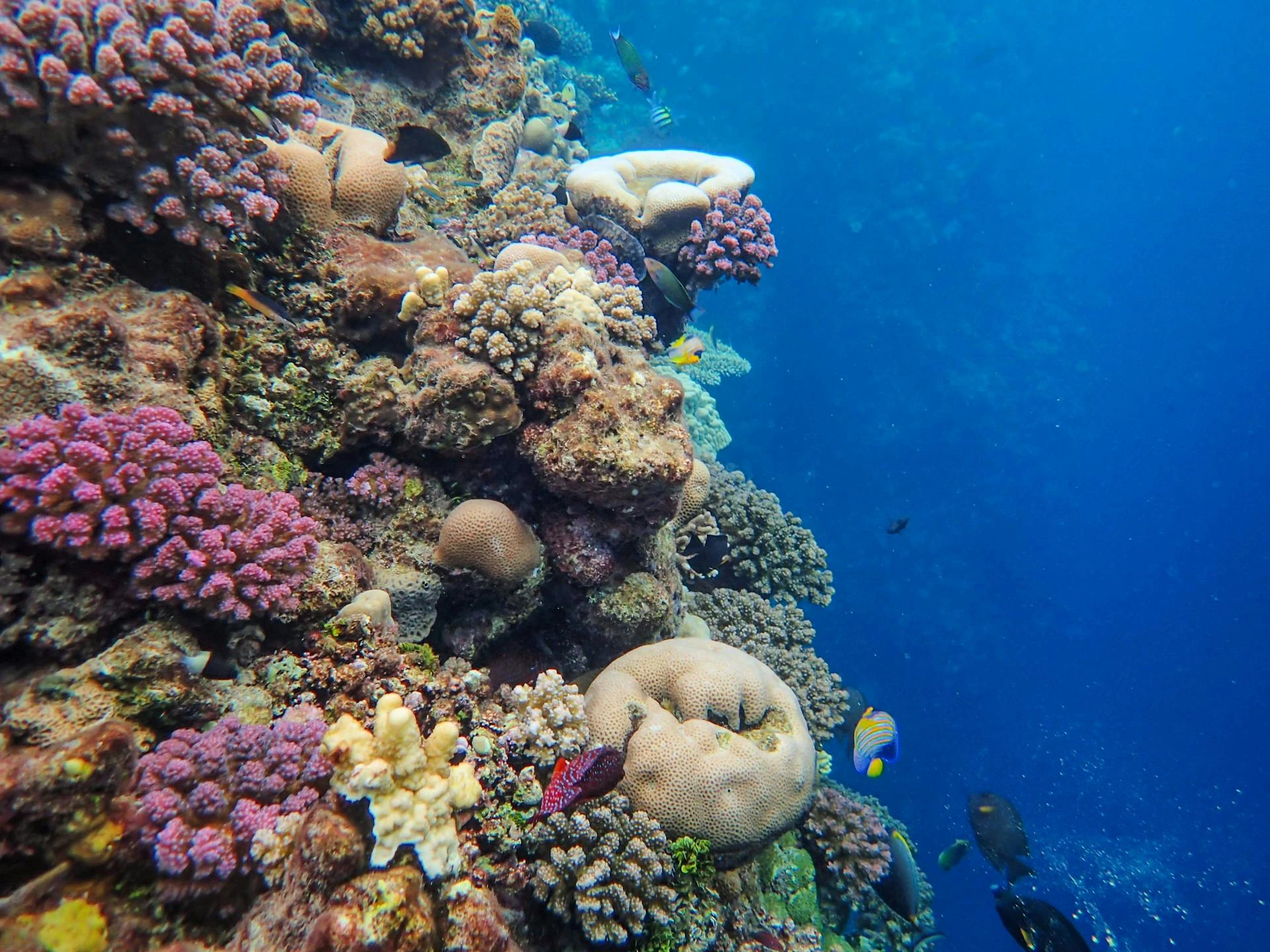
An international symposium in Taiwan has unveiled how robots, AI and “super corals” are being deployed to fight unprecedented bleaching, with scientists warning that time is running out to save the world’s reefs
Scientists are turning to robots and artificial intelligence in a desperate bid to save the world’s coral reefs, after marine heatwaves left more than four-fifths of them bleached.
At an international symposium in Taiwan this week, experts from eight countries warned that time is running out for one of the planet’s richest ecosystems.
Since 2023, record sea temperatures have caused bleaching in 84% of reefs across 82 nations, threatening the survival of thousands of species of fish and marine life that depend on them.
The two-day Delta International Coral Restoration Symposium, held at the National Museum of Marine Biology and Aquarium in Pingtung, invited 12 top conservation institutions, including the International Union for Conservation of Nature (IUCN), the world’s largest nature conservation organisation, and the Mote Marine Laboratory in the United States, an international authority on marine ecology research.
In total, 14 scholars from eight countries shared in-depth information on the latest application trends such as AI coral survey mechanisms and large-area imaging of corals to build digital twins.
The seminar focused on practical applications and technology, and for the first time showcased the latest results of collaborative robot solutions in assisting the cultivation of heat-resistant corals, demonstrating the innovative practice of combining technology with ecological restoration.
Experts revealed that specially cultivated “super corals” in Taiwan have been able to survive water temperatures of 37°C, which is far hotter than most reefs could withstand in nature.
According to the organisers, the heat-resistant corals cultivated by Delta and the National Museum of Marine Biology and Aquarium can maintain 50% photosynthetic efficiency at temperatures as high as 37°C.
Shan-Shan Guo, Vice Chairman of the Delta Electronics Foundation, said: “Since 2023, ongoing global marine heatwaves have caused bleaching of 84% of coral reefs across 82 countries. Delta is committed to coral restoration through volunteers and its own technology, and has restored 10,000 corals to date.
“Over the next five years, we plan to conserve around 300 coral species, over half of those found in the Pacific Ocean, to help tackle severe marine ecological challenges. We are also actively connecting with conservation partners around the world.
“The first Delta international symposium aims to promote exchange and collaboration on technological applications, AI technology, and biodiversity quantification, injecting more innovative momentum into coral conservation.”
To speed up the search for more heat-tolerant species, researchers are deploying collaborative robots.
These machines can transfer fragile coral fragments between tanks while water temperatures are gradually raised, allowing scientists to test their limits far more quickly than by hand.
The process, known as “tank hopping”, makes it possible to spot genetic traits that give certain corals a better chance of survival.
Artificial intelligence is also being harnessed. Dr Jason Spadaro of the Mote Marine Laboratory, who attended the 2024 Convention on Biological Diversity meeting with the Delta Electronics Foundation, said AI can assist in coral surveys, such as determining coral cover in a habitat and suitability for transplantation.
Stuart Sandin of the University of California, San Diego, said using large-area imaging technology to collect large amounts of coral images and create 3D models will help scientists study coral ecological changes in a digital twin environment, providing a basis for conservation and restoration.
The symposium was co-hosted by the Taiwanese Coral Reef Society and the Delta Electronics Foundation, and attracted numerous internationally renowned conservation organisations.
Other participants included the Australian Institute of Marine Science (AIMS), James Cook University (JCU) Australia, the Scripps Institution of Oceanography, University of California San Diego (UCSD-SIO), the Tropical Marine Science Institute (TMSI) at the National University of Singapore, the Coral Triangle Center (CTC) in Indonesia, the Nature Conservation Society of Japan (NACS-J), and the Coral Conservation Society of Japan (also known as Sea Growth).
Taiwanese coral expert Chang-Feng Dai said the event marked a turning point for international cooperation.
“Delta is leveraging the power of its business and foundation to promote the use of technology in ecological conservation, connecting Taiwan’s research and restoration perspectives with the international community,” he said.
“This symposium, combining innovative technologies with practical conservation work, provides an excellent platform for international exchange. We hope it will foster deeper cross-border collaboration on coral restoration in the future.”
Main image: Francesco Ungaro/Pexels
TOP STORIES
-
 British buyers fuel Greek luxury property boom after non-dom tax change
 -
 New York named world’s most attractive city for tourists
 -
Saab lands German frigate deal after Poland submarine order
-
Students unveil world’s first solar-powered ambulance
-
Burnham told to tackle Britain’s cyber weak spots on day one
-
Doctors using AI before health systems set the rules
-
Humanoid robots could become the next K-pop stars
-
Hormuz flashpoint keeps global shipping on high alert
-
Scientists to gather in Lisbon to tackle next pandemic threats
-
Burnham warned digital exclusion is now a national security risk
-
Masts from Kent ‘doomsday wreck’ to be cut to prevent catastrophic explosion
-
GigaCloud and Cubbit launch sovereign cloud storage for Ukraine and Poland
-
Tributes paid to ‘forthright and fearless’ Ann Widdecombe
-
Boeing to debut Ghost Bat drone at Farnborough Airshow
-
Reeves opens ‘£2bn lifeline’ for small firms
-
Babymoon boom: Rhodes crowned 2026's top pre-baby escape as Salcombe leads UK getaway list
-
Xavier Niel to become Vodafone’s largest shareholder in £4.4bn deal
-
Two-thirds of lawyers say strong legal claims are dropped because of cost
-
UK government must "think again" about small business plan
-
Lockheed Martin pushes European missile expansion at NATO summit
-
Britain's new homes face 2050s heat test as experts warn of overheating crisis
-
Sky agrees £1.6bn deal to buy ITV’s broadcasting and streaming arm
-
Scientists crack dinosaur egg mystery by building life-size nest
-
Nobel laureate Omar Yaghi launches global science network
-
Cardiff drivers safest in Britain as London comes last